

Galapagos news
02/13/2026: Twelve new whale sharks discovered in the Galapagos Islands Marine Protected Area!
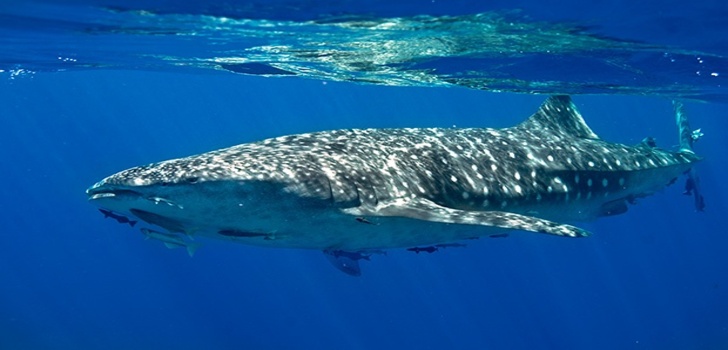
A dozen new examples of whale sharks have been spotted in the Galapagos Marine Reserve, the protected area of the Ecuadorian archipelago. The Galapagos National Park announced this on Monday (14). The new sightings were made by the Galapagos Whale Shark Project, made up of scientists and park rangers living in the archipelago about a thousand kilometers off the coast of Ecuador. Participating researchers included members of the Galápagos National Park Directorate (DPNG) and the Galápagos Science Center (GSC), operated by the University of San Francisco de Quito (USFQ) and the University of North Carolina at Chapel Hill (UNC). They tagged seven animals with satellite devices to track their movements. Among them was an adult male, a find of “particular significance” as “females account for 99% of sightings in this area”. In addition, during the inspection, a specimen (female) was found that had been recorded for the first time 13 years ago, “which demonstrates the loyalty of these animals to this area”.
A total of 758 whale sharks have been recorded so far in the 130,000 square kilometer area of the Galápagos Marine Protected Area, a number achieved thanks to the collaboration between "nature guides, diving guides, artisanal fishermen and visitors to the islands" who have reported their sightings to authorities throughout their lives. “Your participation has been crucial to improving the monitoring and protection of this migratory species,” said Galápagos National Park officials. Jenifer Suárez, Director of Ecosystems at Galápagos National Park, pointed out that these “discoveries significantly expand our knowledge of the ecology of whale sharks in the Galápagos (…) The information is crucial to make more effective management decisions and ensure the long-term conservation of this emblematic species”. (Source: latina-press.de)