

Galapagos Frigatebirds
The Great Frigate Bird resembles a huge blackbird that hovers lazily in the sky. Frigate birds belong to the family Fregatidae, which contains five species world-wide. In the Galapagos there are two species: the Great Frigate bird and the Magnificent Frigate bird. Of the two, the Great Frigate bird has the greater world-wide distribution, being found primarily throughout the tropical Pacific and Indian Oceans.
The Magnificent Frigate bird is found in the Caribbean and on the Pacific and Atlantic coasts of the Americas. The Galapagos population of Magnificent Frigate birds is considered to be an endemic subspecies.
In the Galapagos, the two species can be seen nesting side by side, but when Frigate birds are sighted in the air, they typically are Magnificent Frigate birds, as Great Frigate birds tend to forage much further out at sea. As with the three similar species of Booby birds, similar species of Frigate Birds avoid competition by feeding in different locations.
You can tell the two species of Frigate birds apart by their sounds – a Great Frigate bird makes a ‘gobbling’ noise like a turkey, while a Magnificent Frigate bird will make a rattling or drumming sound.
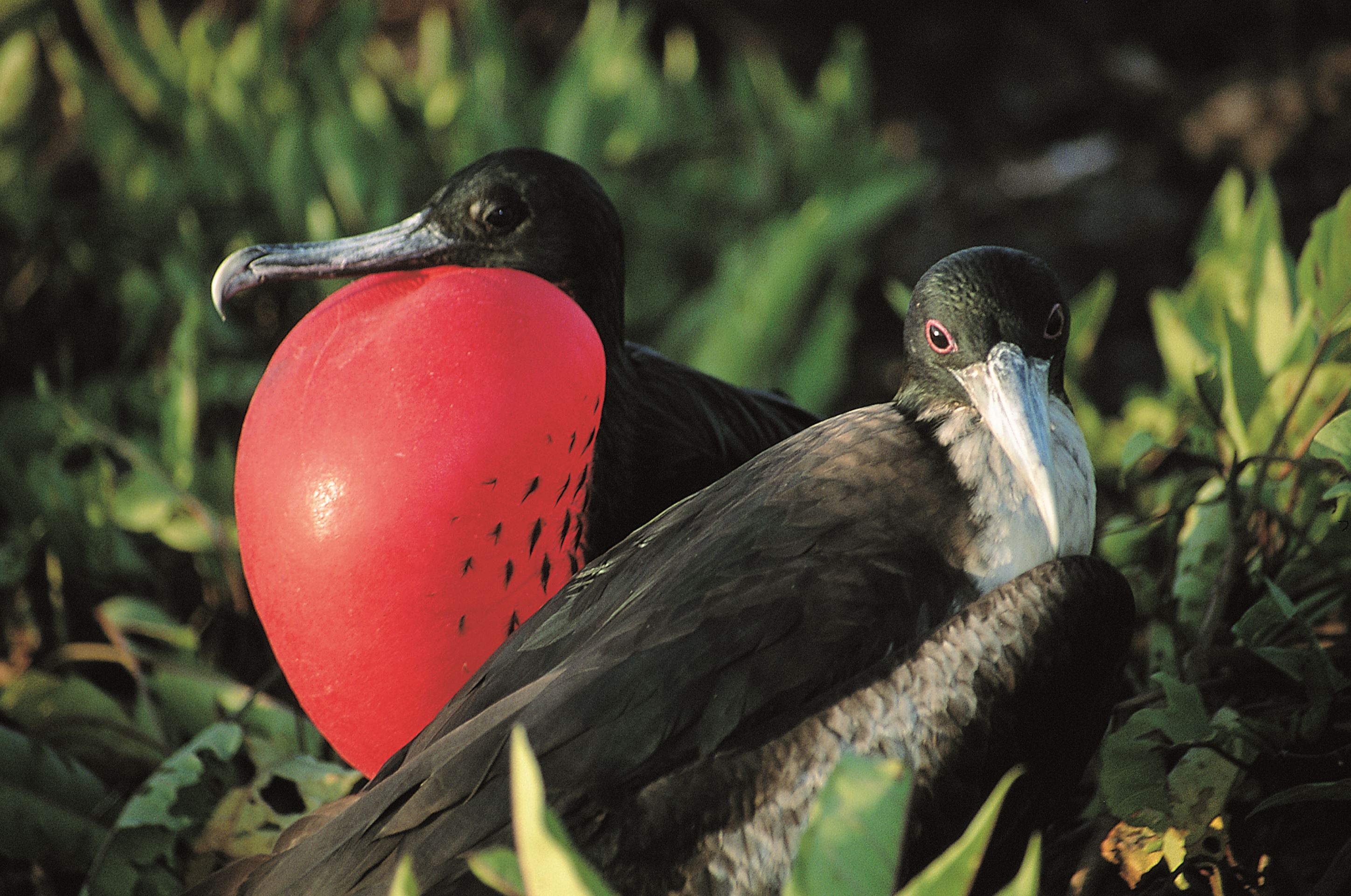
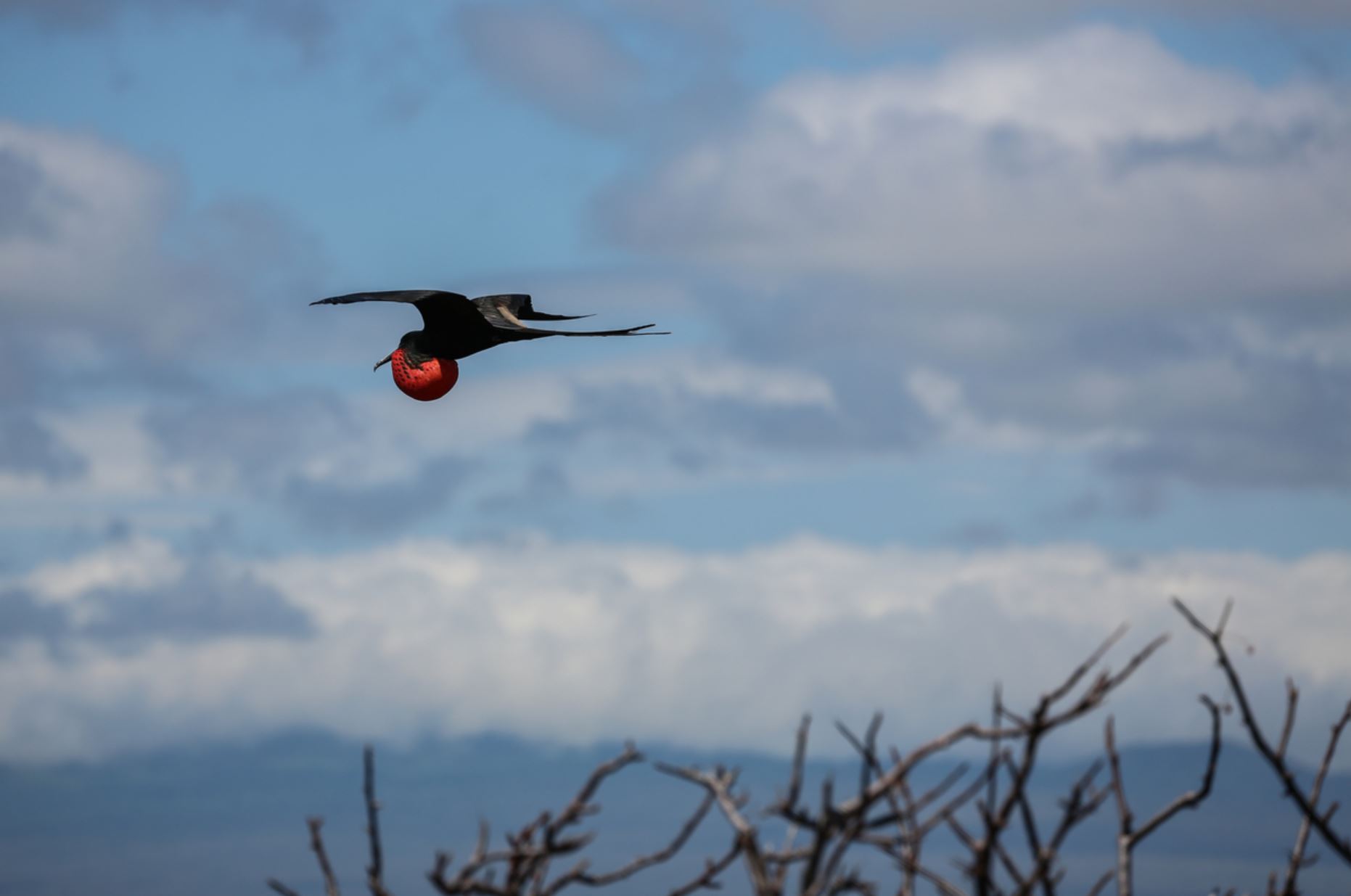
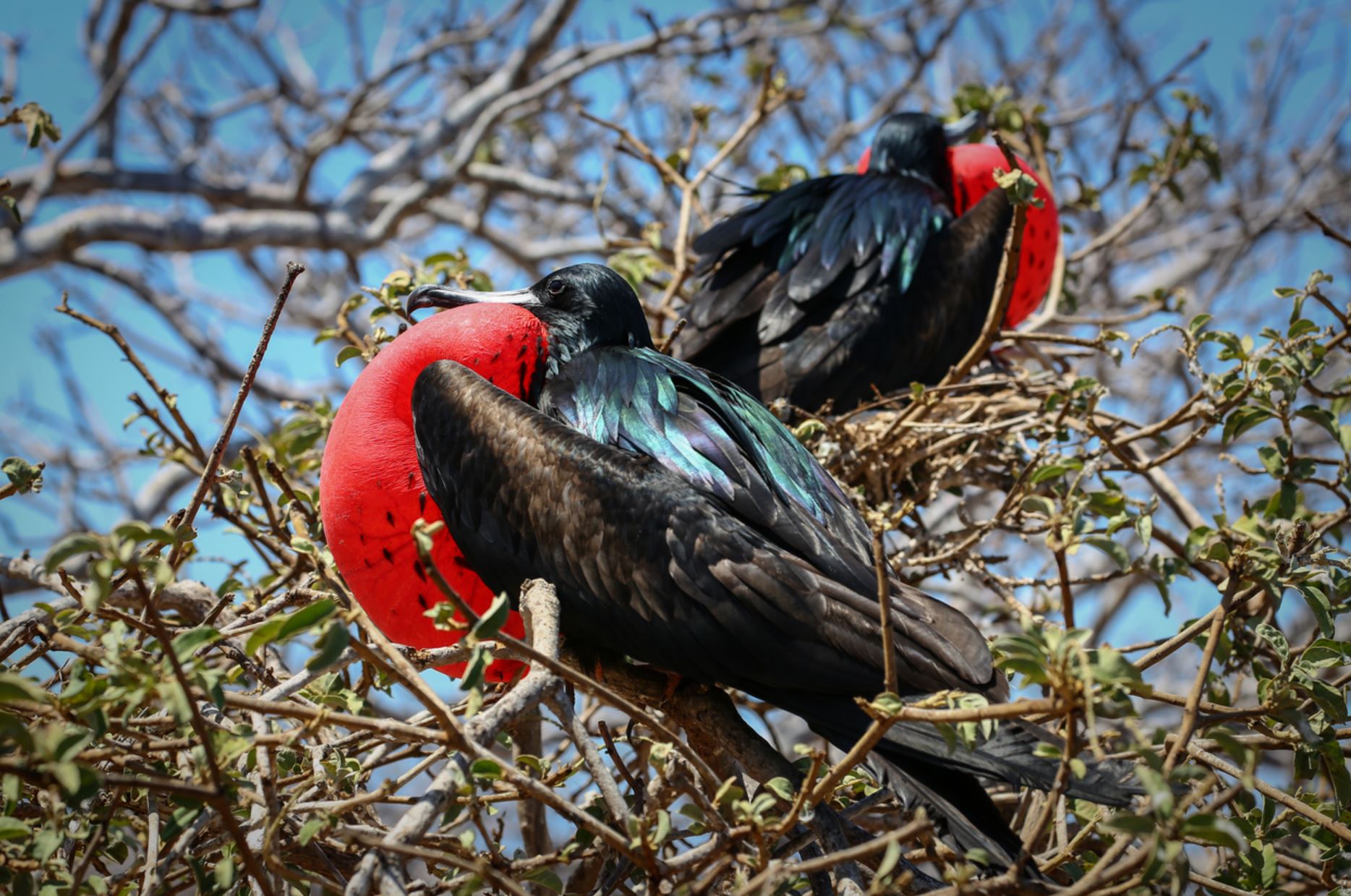
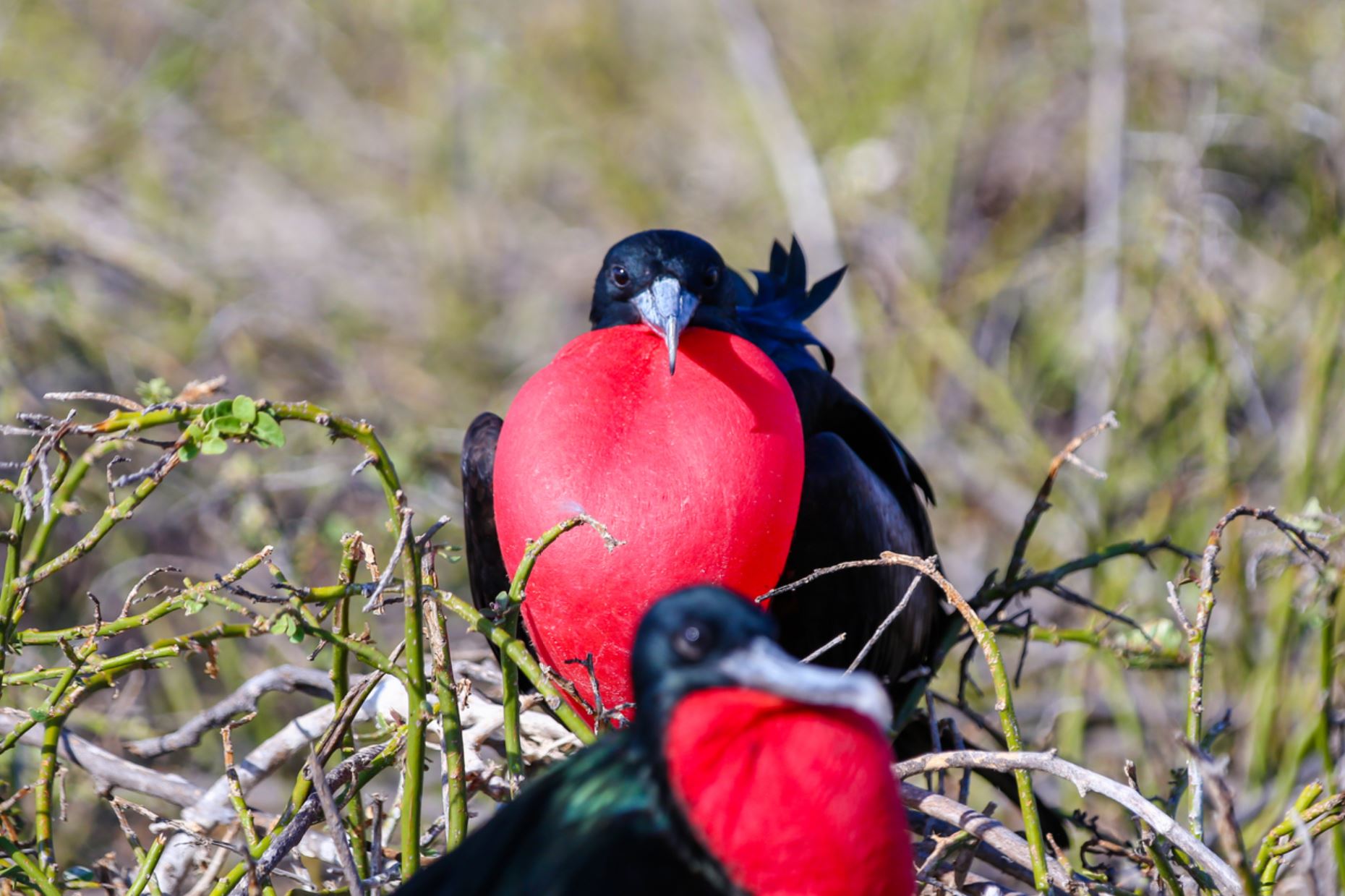
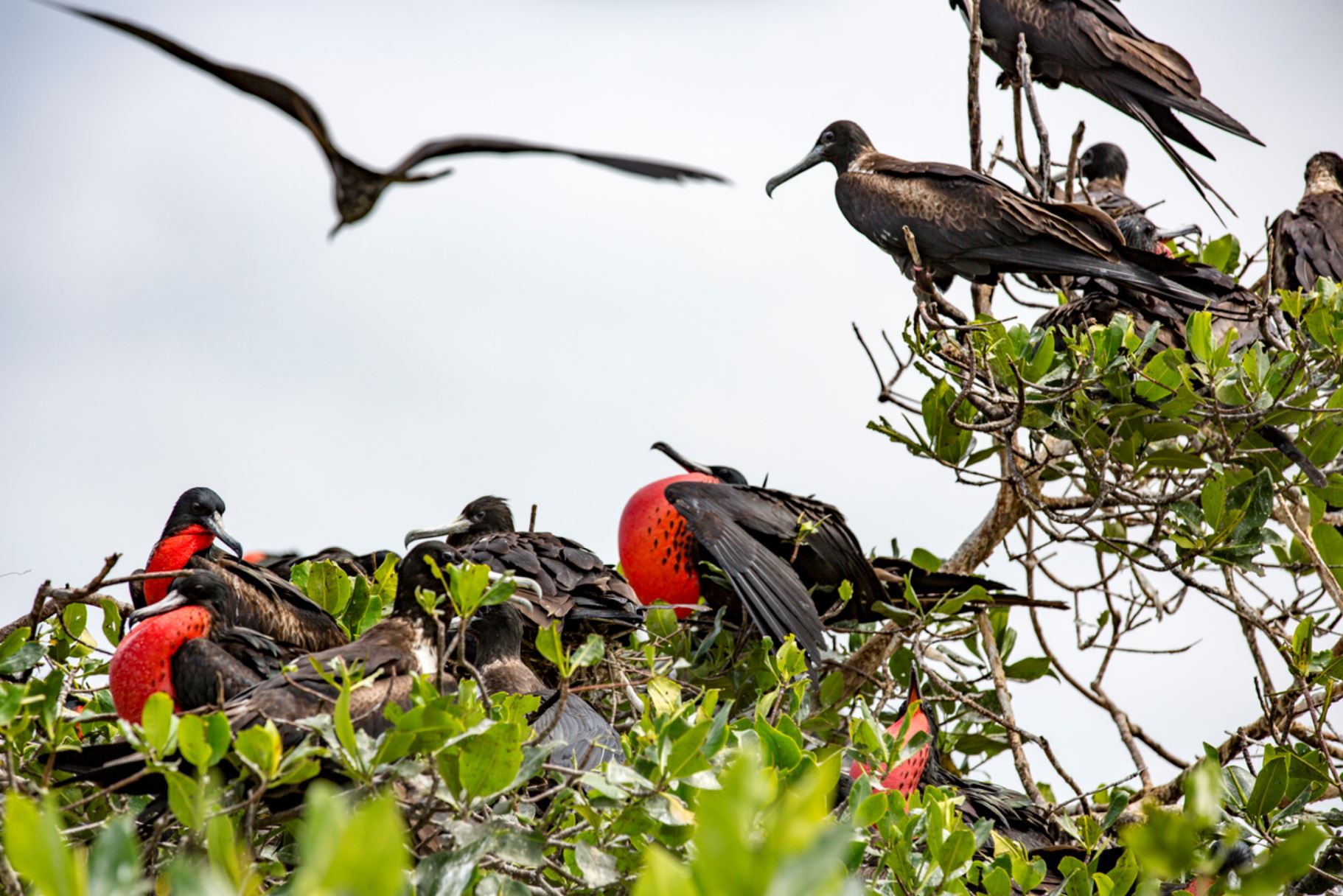
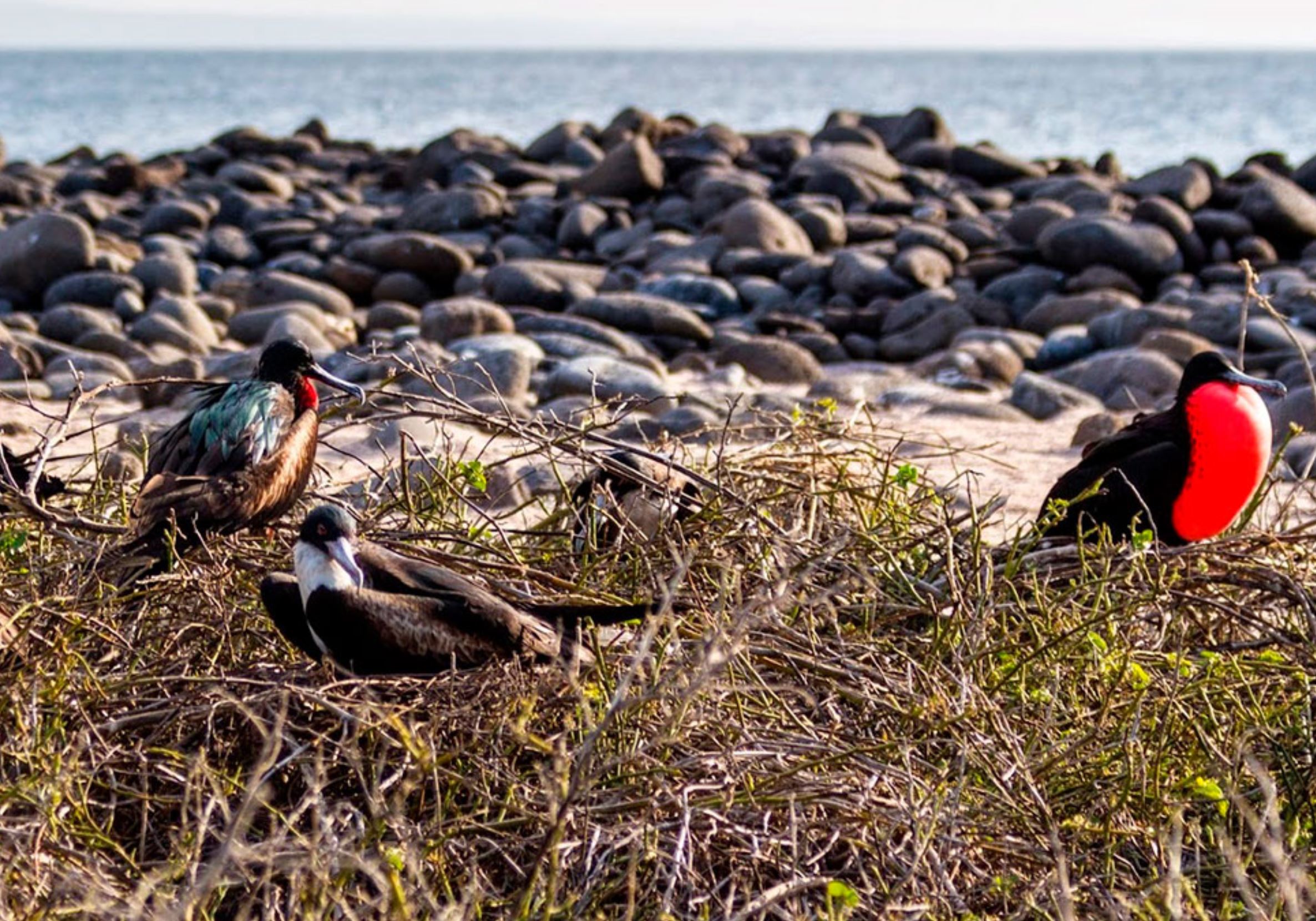
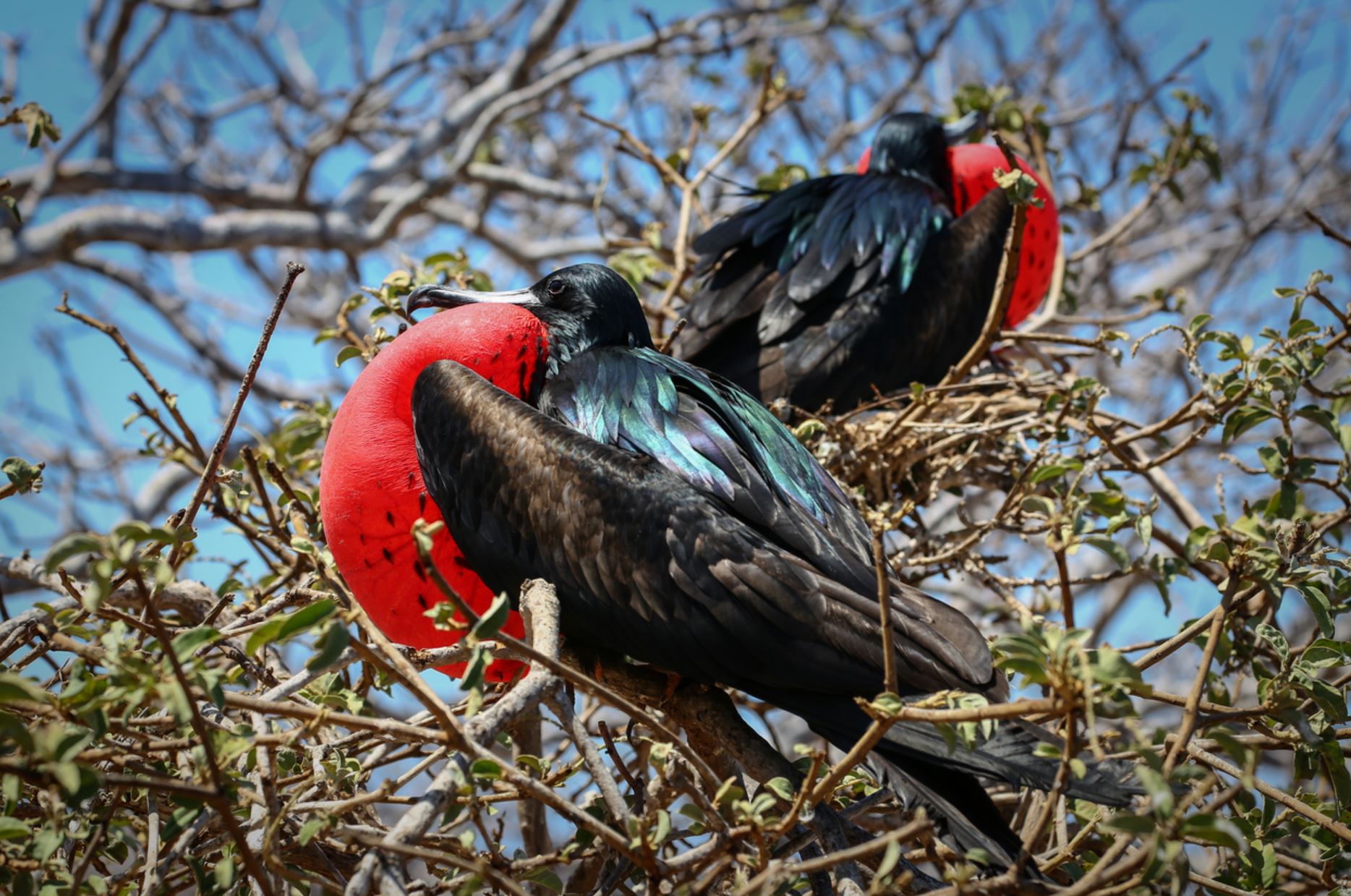
Great Frigate birds are large, with iridescent black feathers (the females have a white underbelly), with long wings (male wingspan can reach 2.3 metres) and deeply-forked tails. The males have inflatable red-coloured throat pouches, which they inflate to attract females during the mating season.
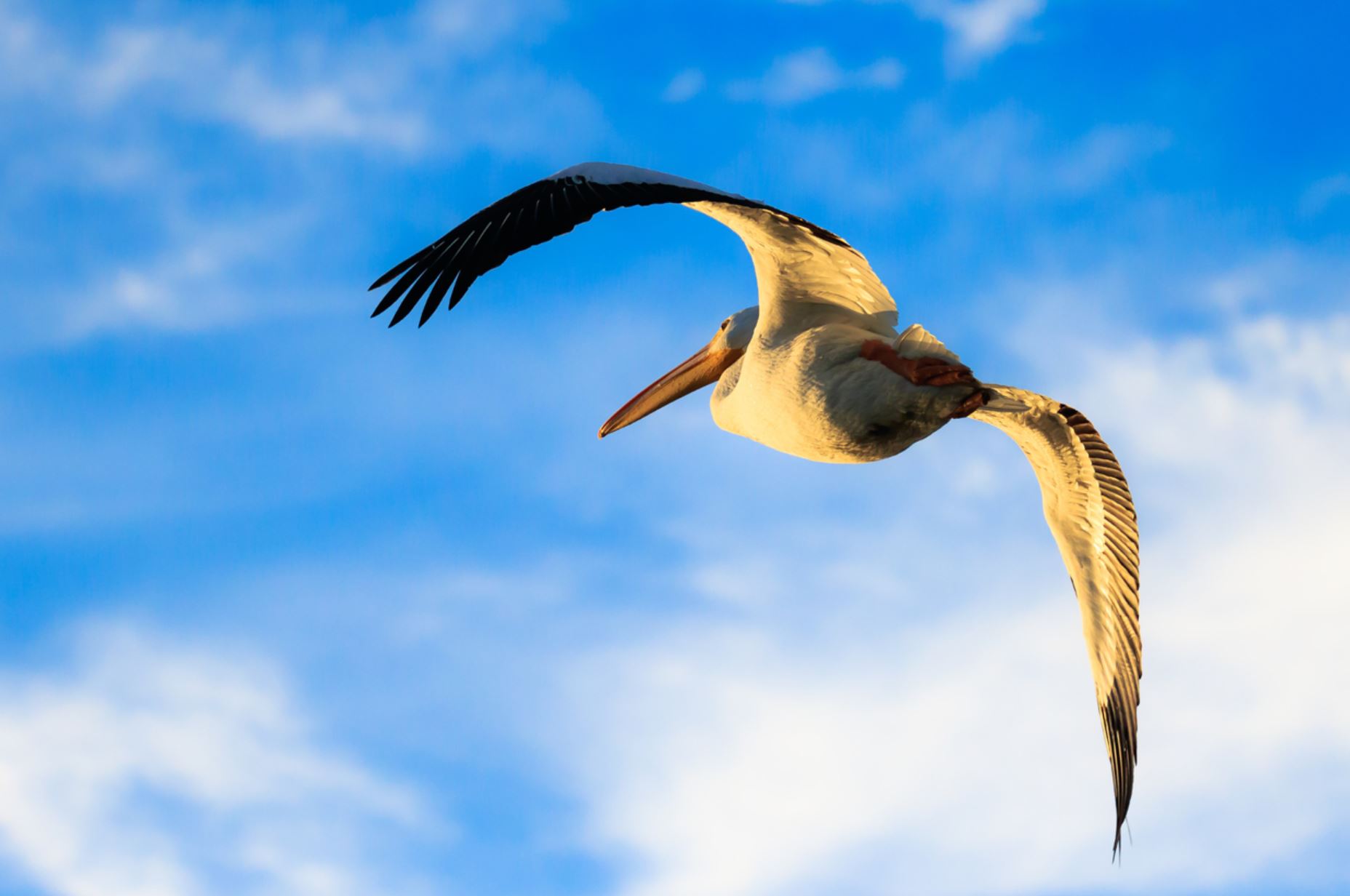
Both species of Frigate bird have extremely high wingspans to bodyweight ratios allowing them soar and to fly extremely well and with excellent control. Using this control, Frigate birds routinely steal food from other birds by grabbing them by their tail feathers and shaking them until they regurgitate their food.
However, Frigate birds are also capable of capturing their own prey. Since Frigate birds have only a small oil gland and very little waterproofing in their wings, Frigate birds cannot dive and must instead rely on their superb aerobatics to snatch flying fish out of the air.
- Animal Group: Seabirds
- Scientific Name: Fregata magnificens
- Animal Average Size: 215 cm
- Animal Average Weight: 1.1 kg
Places where you may see this animal:
Genovesa
North Seymour
San Cristobal
Floreana
Pictures
Islands where you can see the animal with a little luck:
San Cristóbal
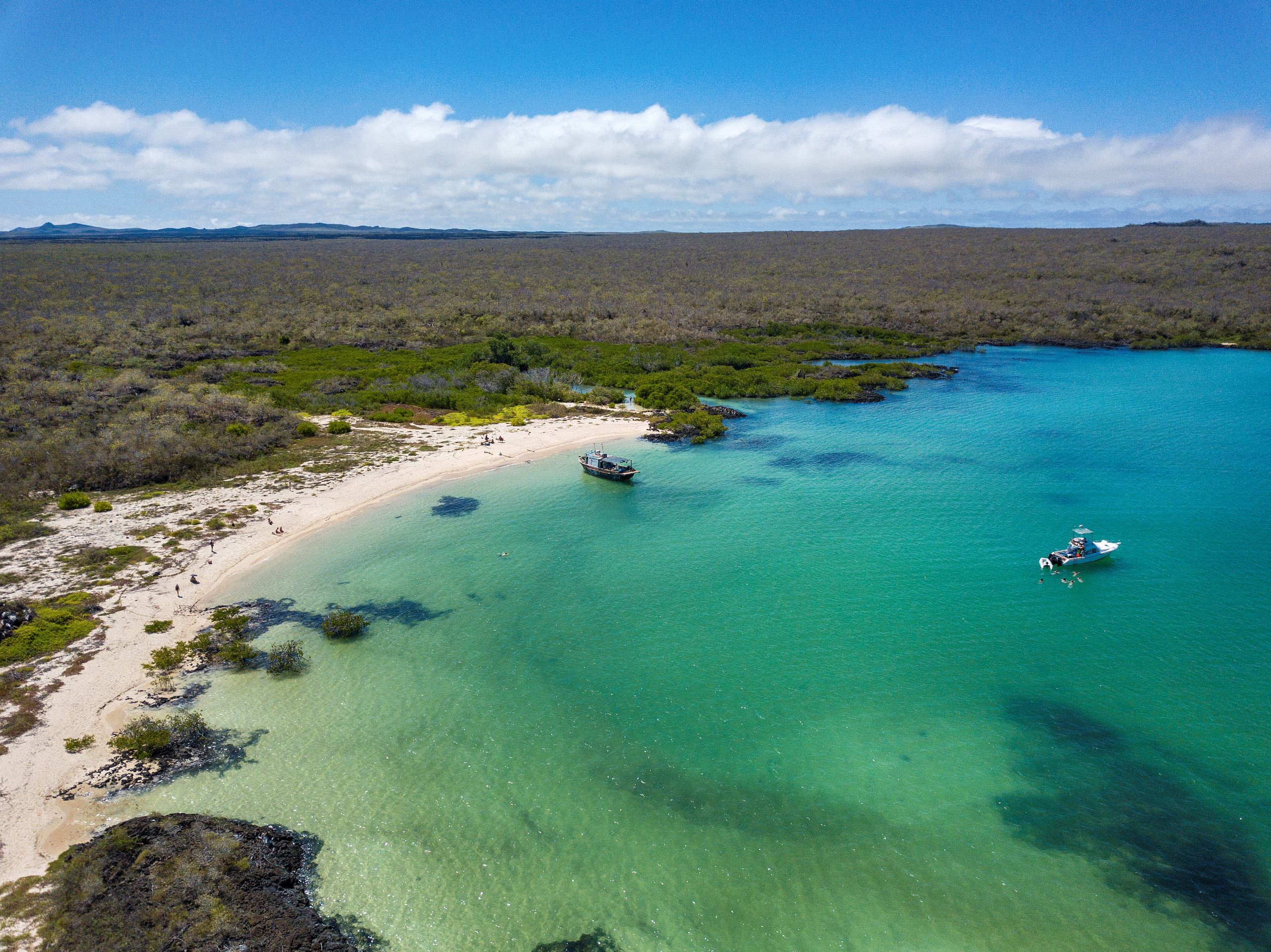
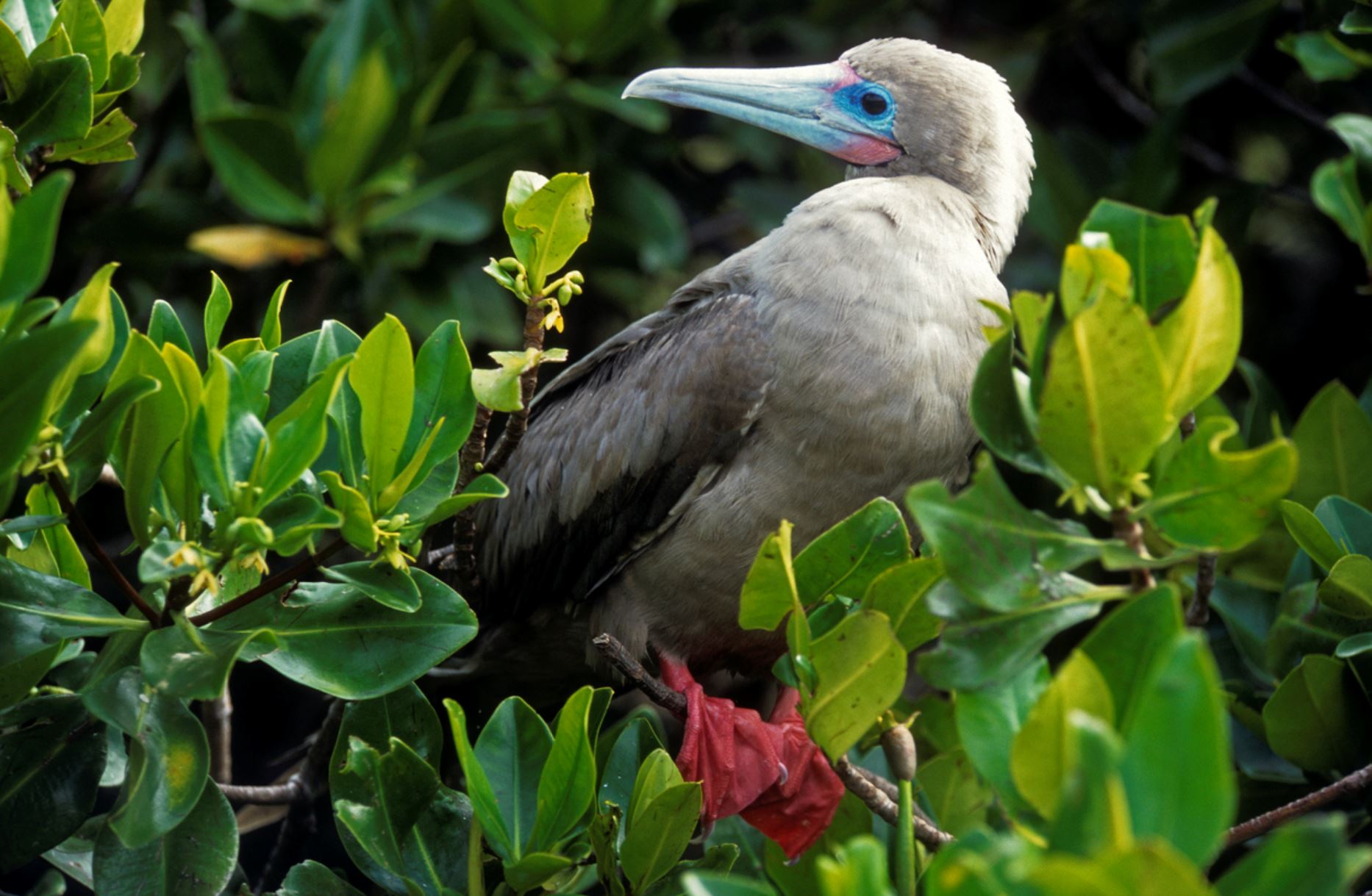
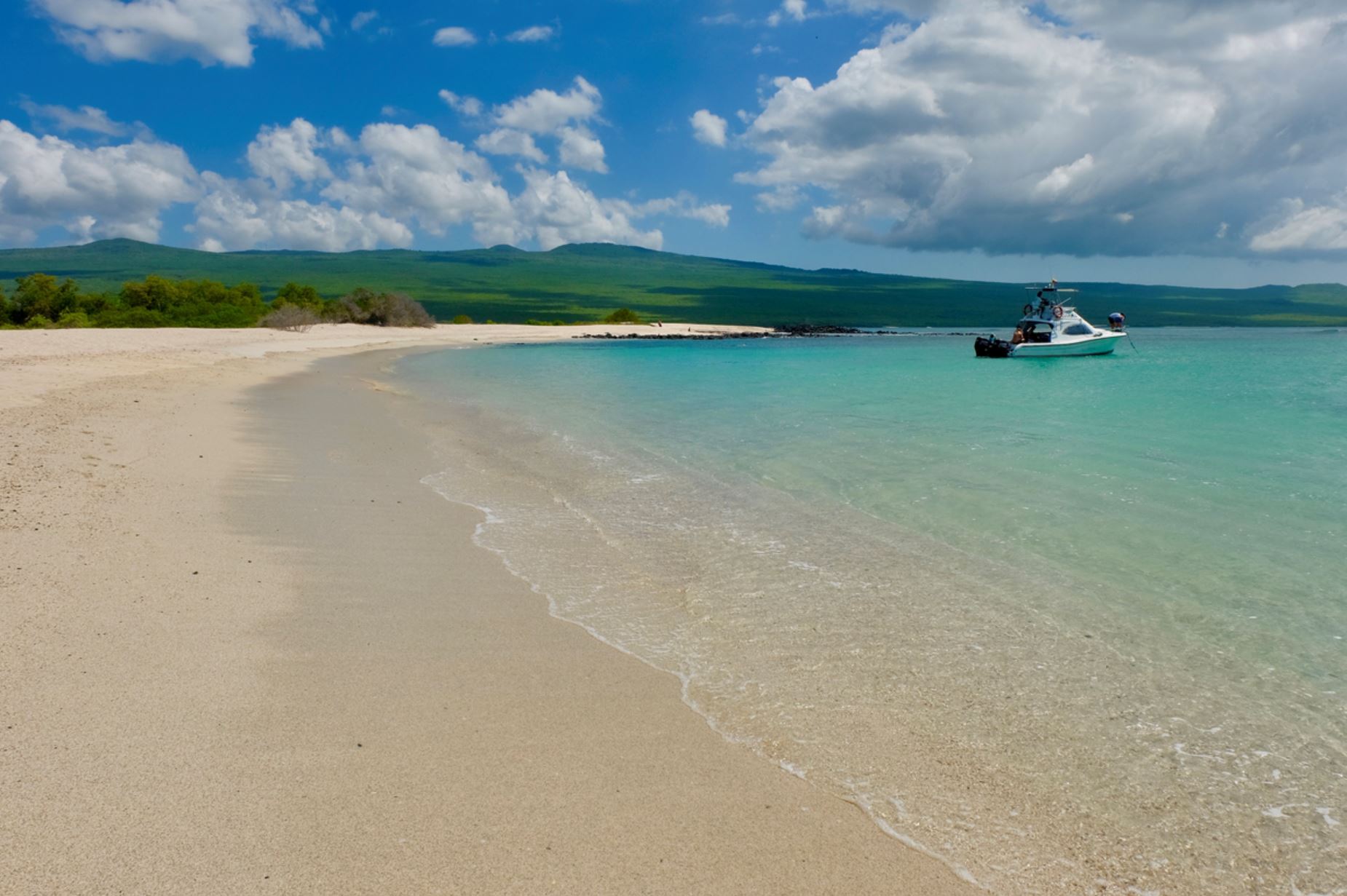
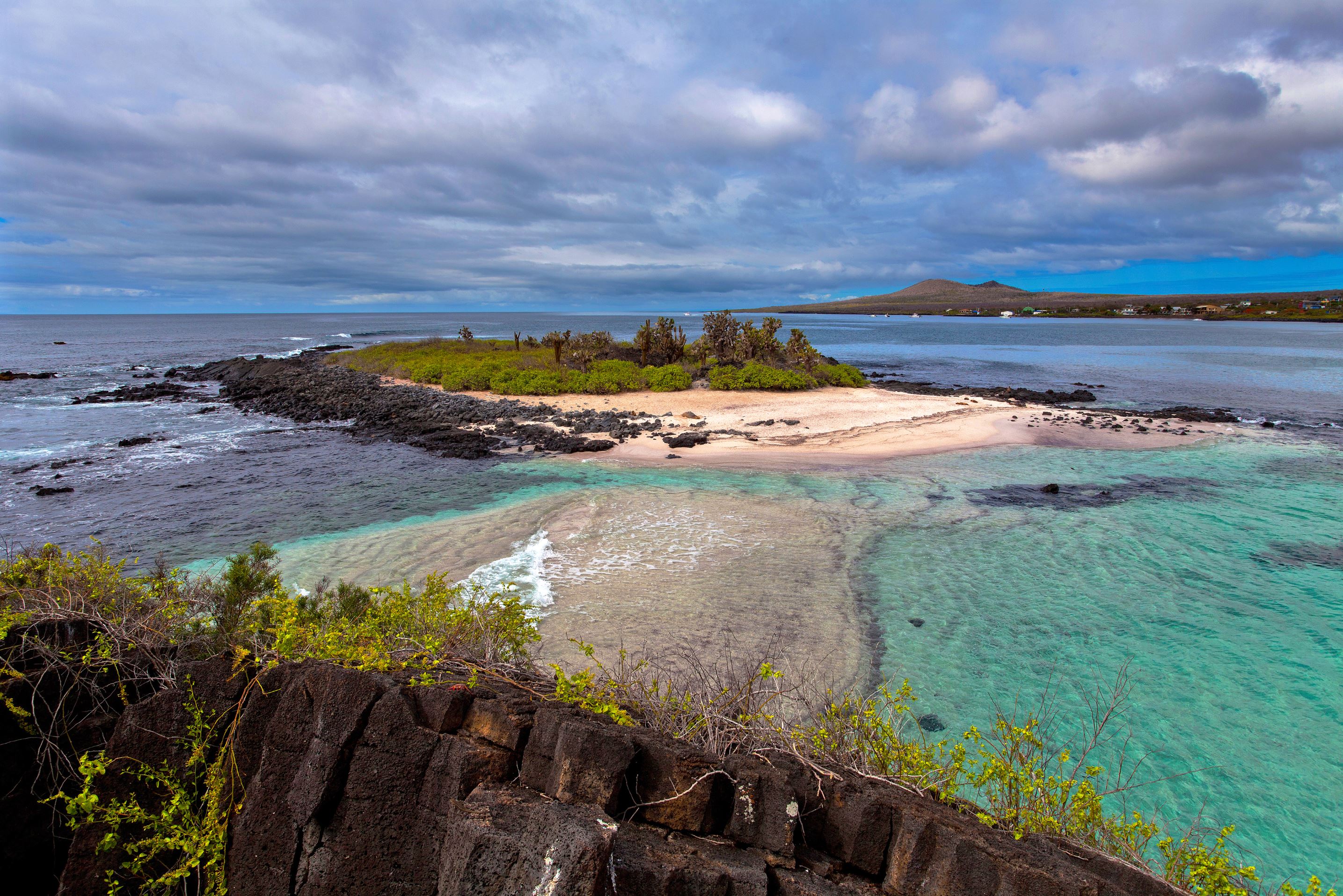
One of the oldest and closest to the continent, located on the east of the archipelago, which means it is the farthest of the hot spot of all, about 200 kilometers away from it with no volcanic activity. It is formed by four volcanoes bonded together and is the most humid island due to underground aquifers and fresh water flows. The English named it Chatam because of the British Prime Minister William Pitt of Chatam. It holds the biggest fresh water lake of the archipelago called El Junco, located on the south center part of the island about 660m above sea level. San Cristobal is one of the two only places where the Red Footed Booby can be found in a nesting colony in Punta Pitt visiting site.
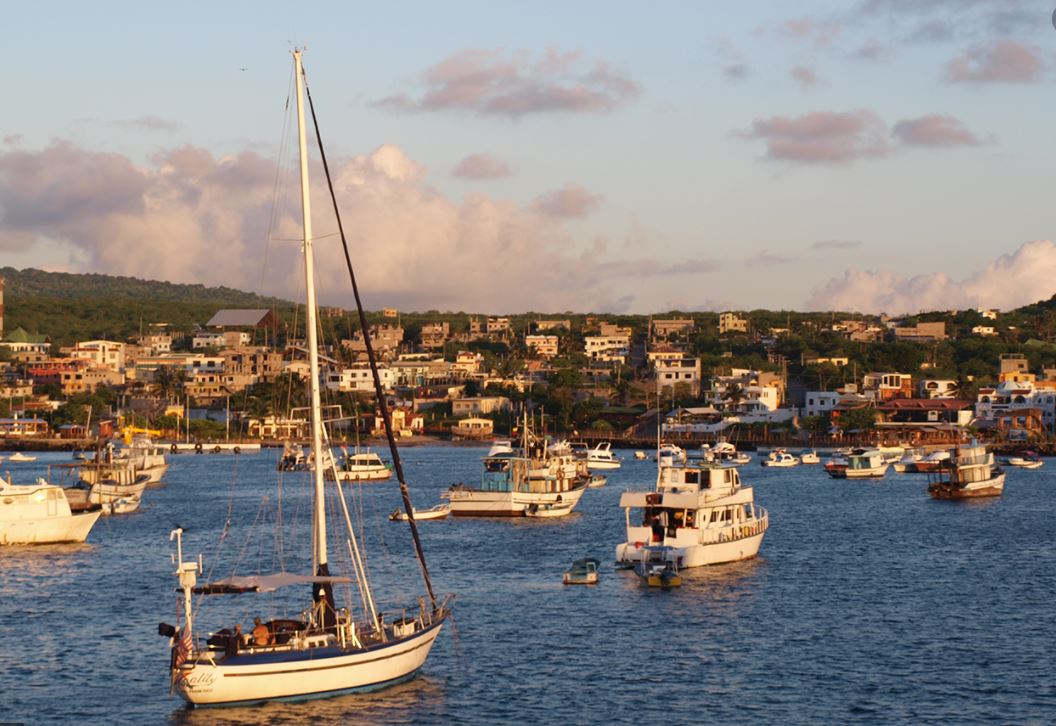
This island is the capital of the archipelago, Puerto Baquerizo Moreno, with a population of about 7 thousand people. Human development started on the early 1832, firstly on the highlands on a sugar production settlement. An Interpretation Center was developed in town, where visitors can learn about the biological and historic facts that conform the islands.
Charles Darwin Journey on San Cristobal. This is the first Island visited by Charles Darwin, and his first impression of the dry coast he saw was of a deserted and isolated place. He did not find the tropical richness he expected, but he had the chance to collect the first specie that later on would be the start of his Theory of Evolution, the San Cristobal Mockingbird.
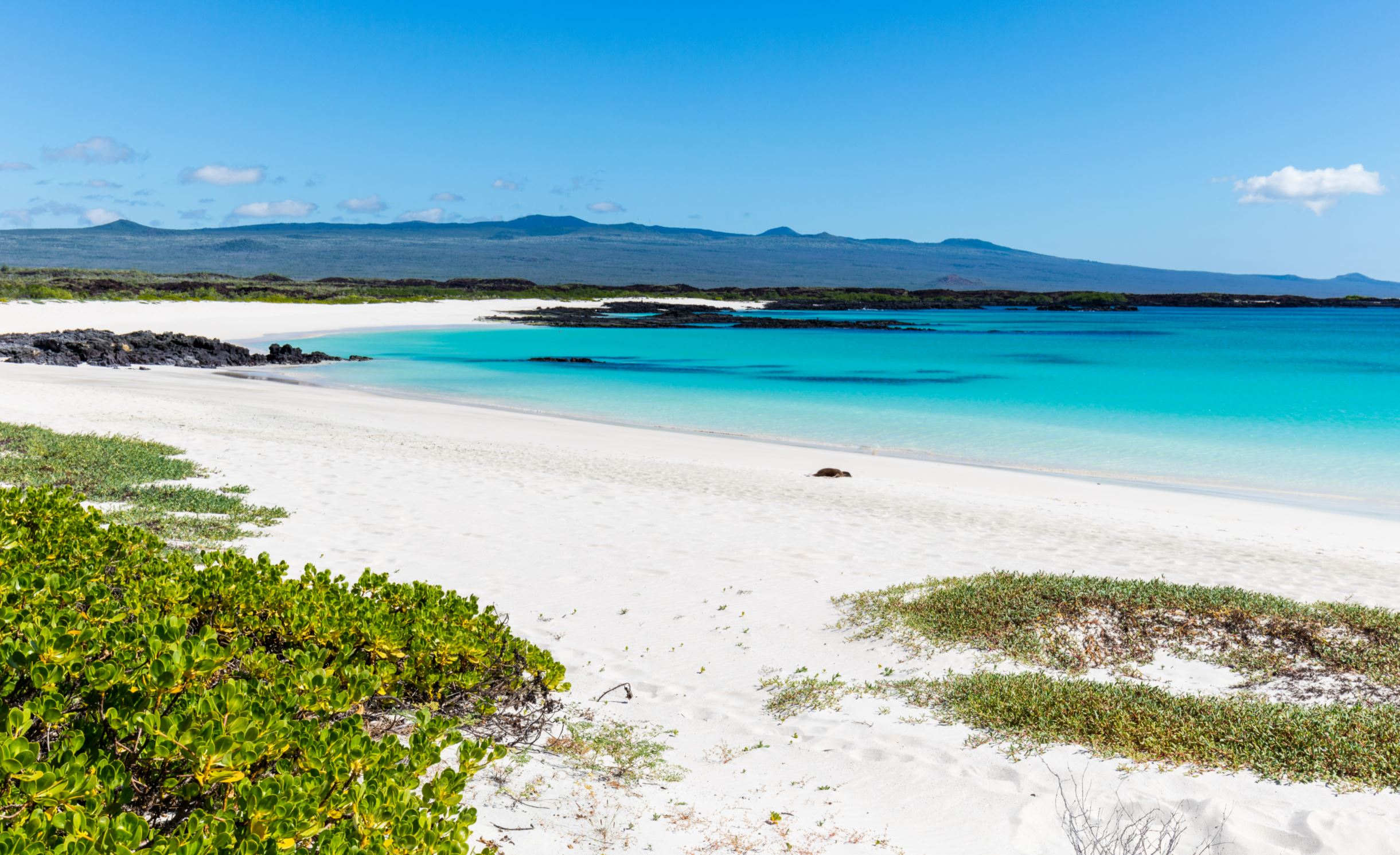
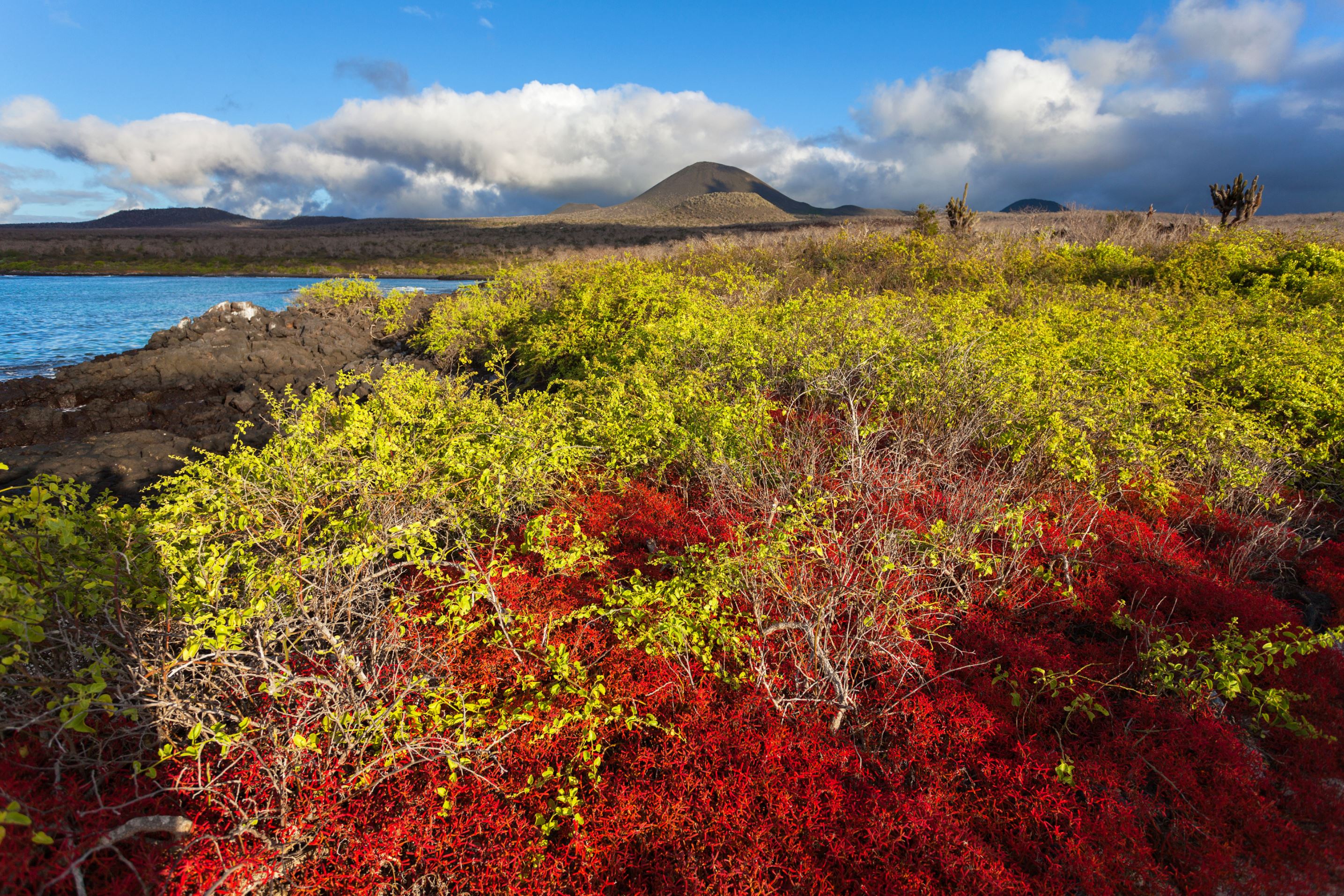
Punta Pitt visitor site is one of the two only places where the Red Footed Booby can be found in a nesting colony and offers an amazing red landscape full of Sesuvium, a very special endemic plant specie that turns color depending on the season. It has a magnificent beach formed with Peridot, a sparkly mineral creation that shines green with sunlight.
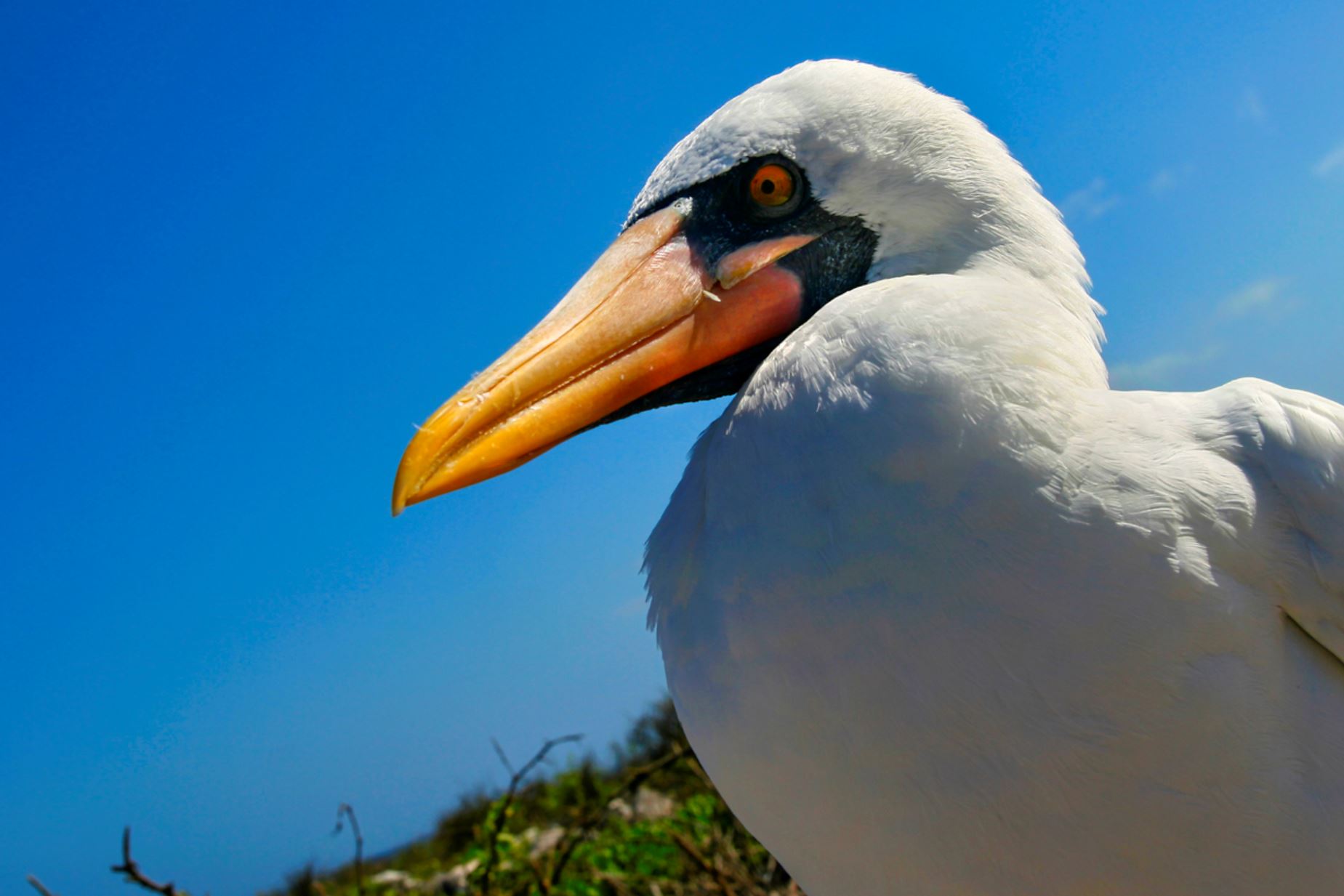
Cerro Brujo visitor site is the only place in the archipelago where Red Footed Boobies, Nasca Boobies and Blue Footed Boobies are found nesting together.
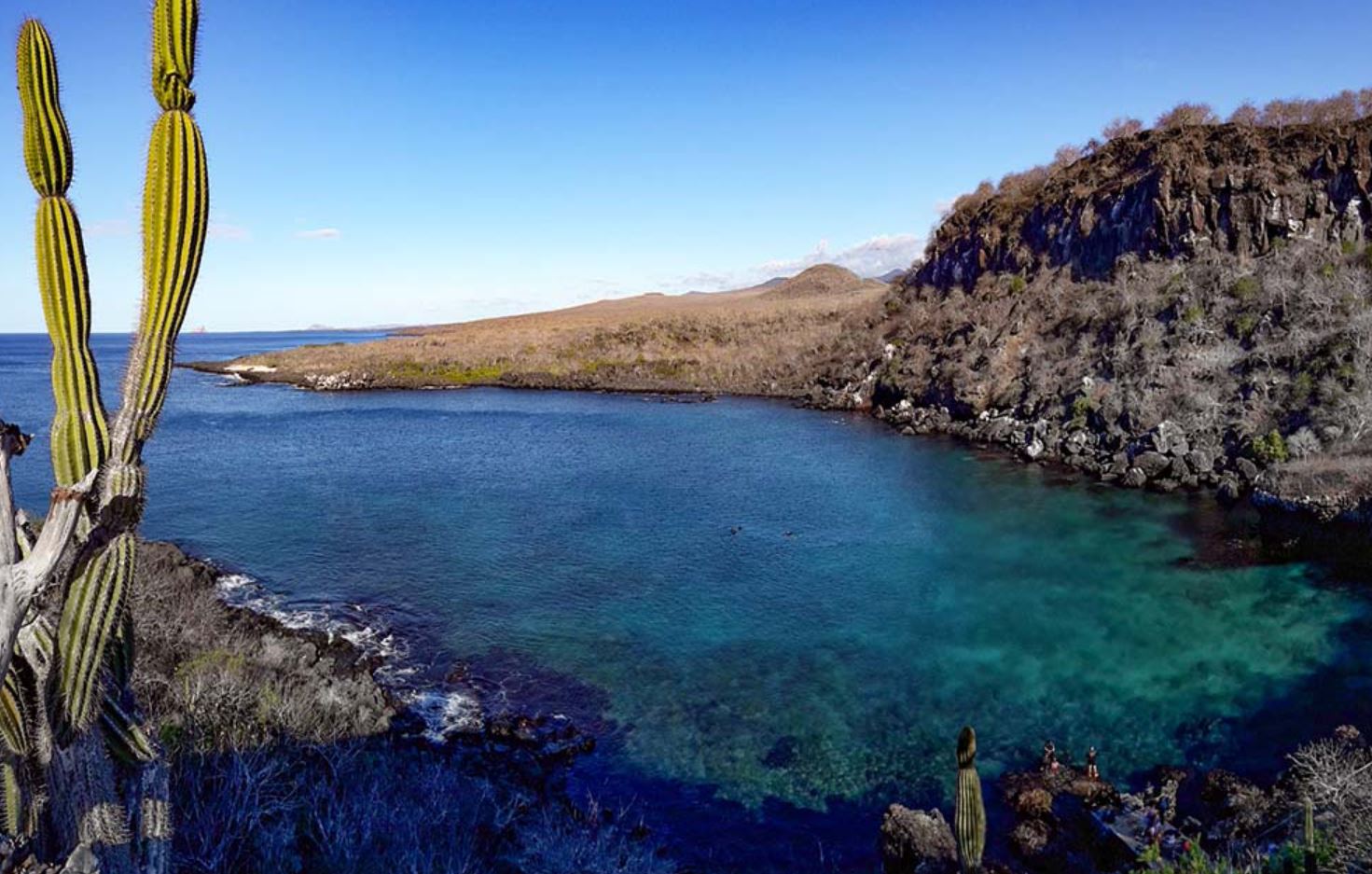
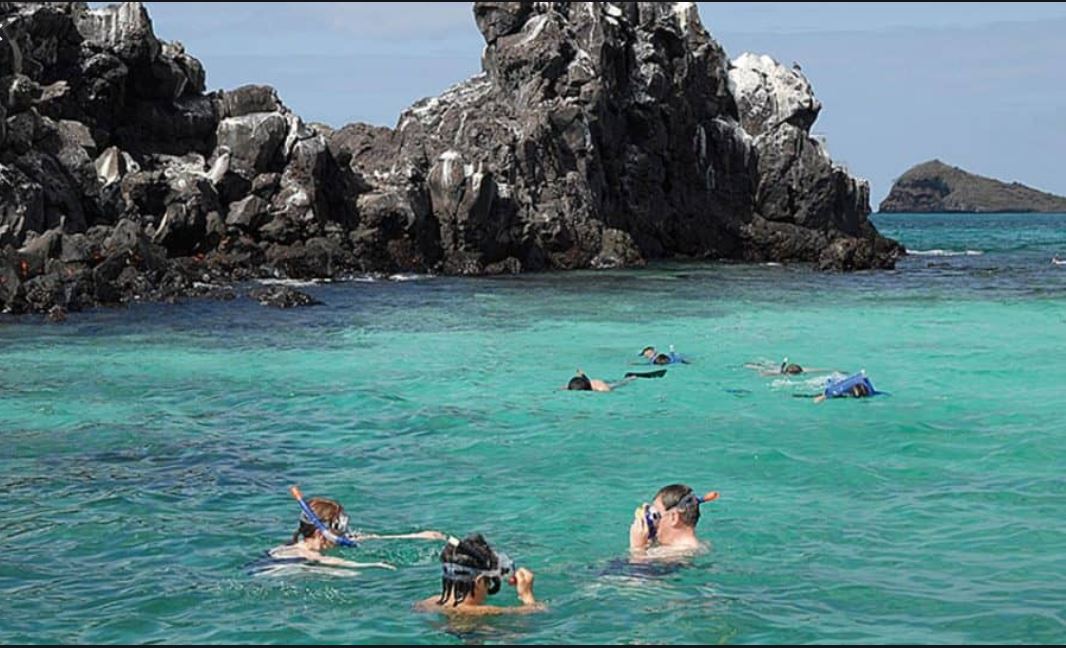
Tijeretas visitor site is the very first point that Charles Darwin visited on his journey. Not far from the interpretation center, there is a calm water rocky bay, a magnificent snorkel area and view site for nesting Frigate Birds, animal from which the place takes its name, Tijeretas.
Cerro Colorado visitor site on the southwest side of the island holds the facility of the Tortoise breeding Center, an semi natural area built for the purpose of rebuilding the tortoise population of the island and their conservation.
Visitor sites
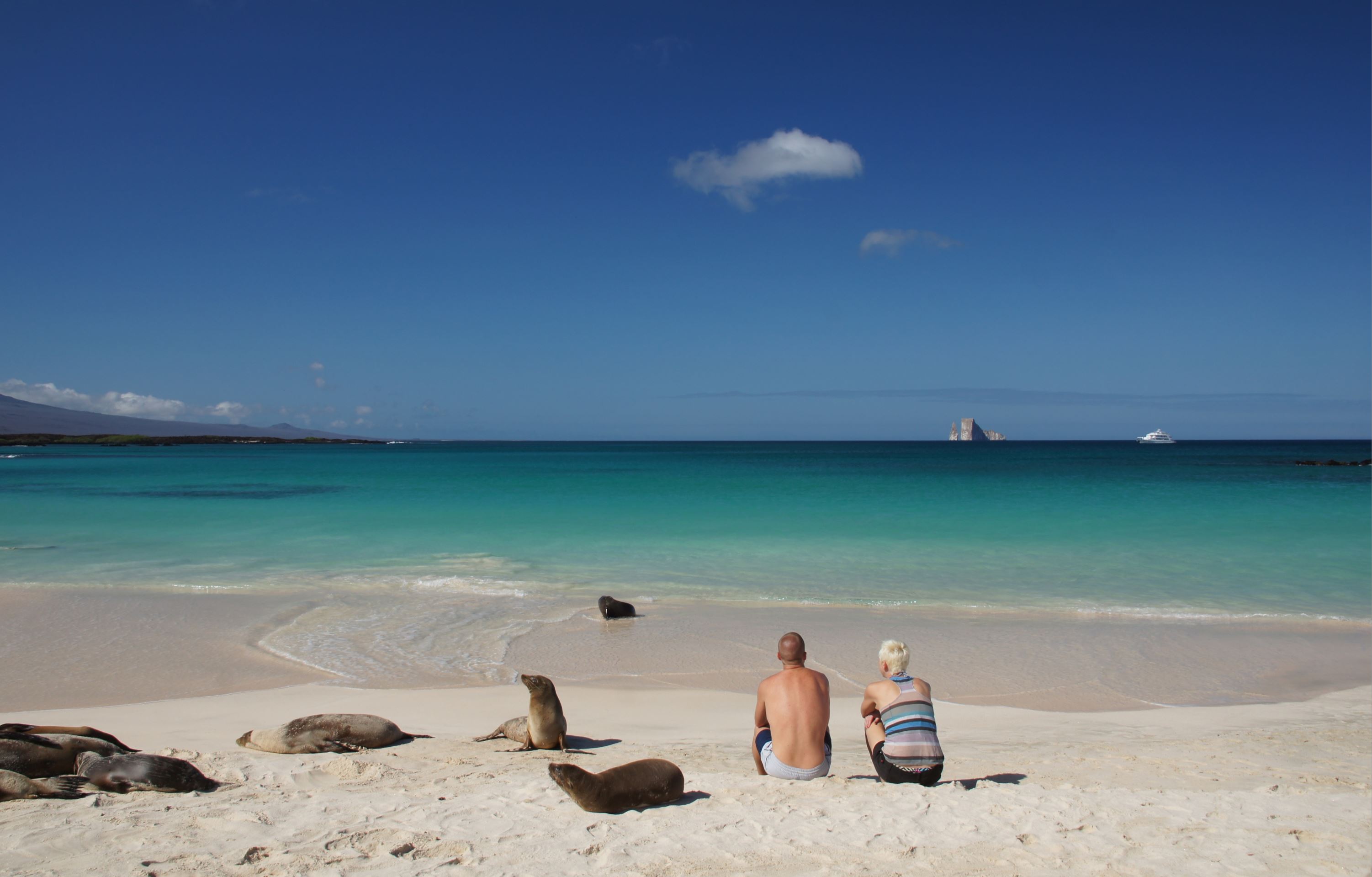
El Junco Lagoon, Kicker Rock, La Galapaguera Jacinto Gordillo Breeding Center, Interpretation Center Gianny Arismendi , Tijeretas Hill, Lobo island, Pitt Point, Puerto Baquerizo Moreno, Puerto Chino, Witch Hill
Floreana
The first successfully populated island is located on the south east of the archipelago, and is formed by several eroded mountains. Today, less than 200 people populate the island.
Island of mystery. This island witnessed the visit of many sailors, whale hunters and many other adventurers that reached it in search of water, tortoises and even isolation. The dramatic story of the Baroness had place on its beaches and lagoon, and many travelers still today hear from strange events that took place here.
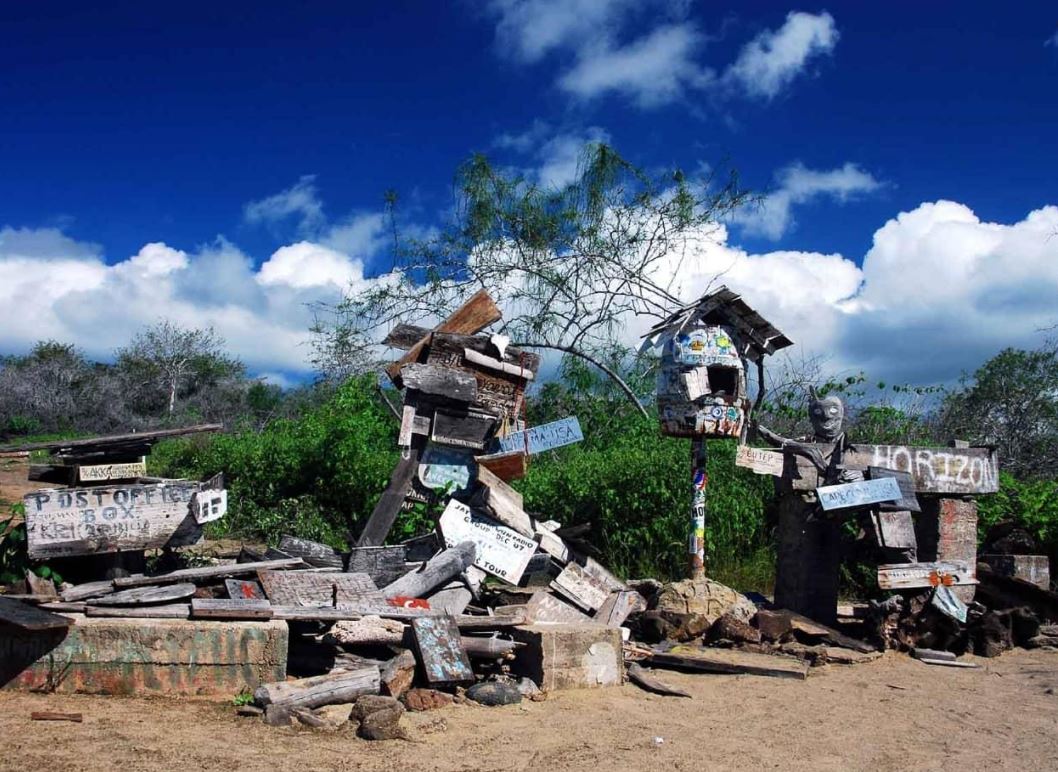
Post Office Bay: the messaging system of the pirates. This island still has a mailing system that was used back in the day by sailors and others that still today receive letters and post cards to be sent to all destinations by visitors that come to the location and leave one of their own.
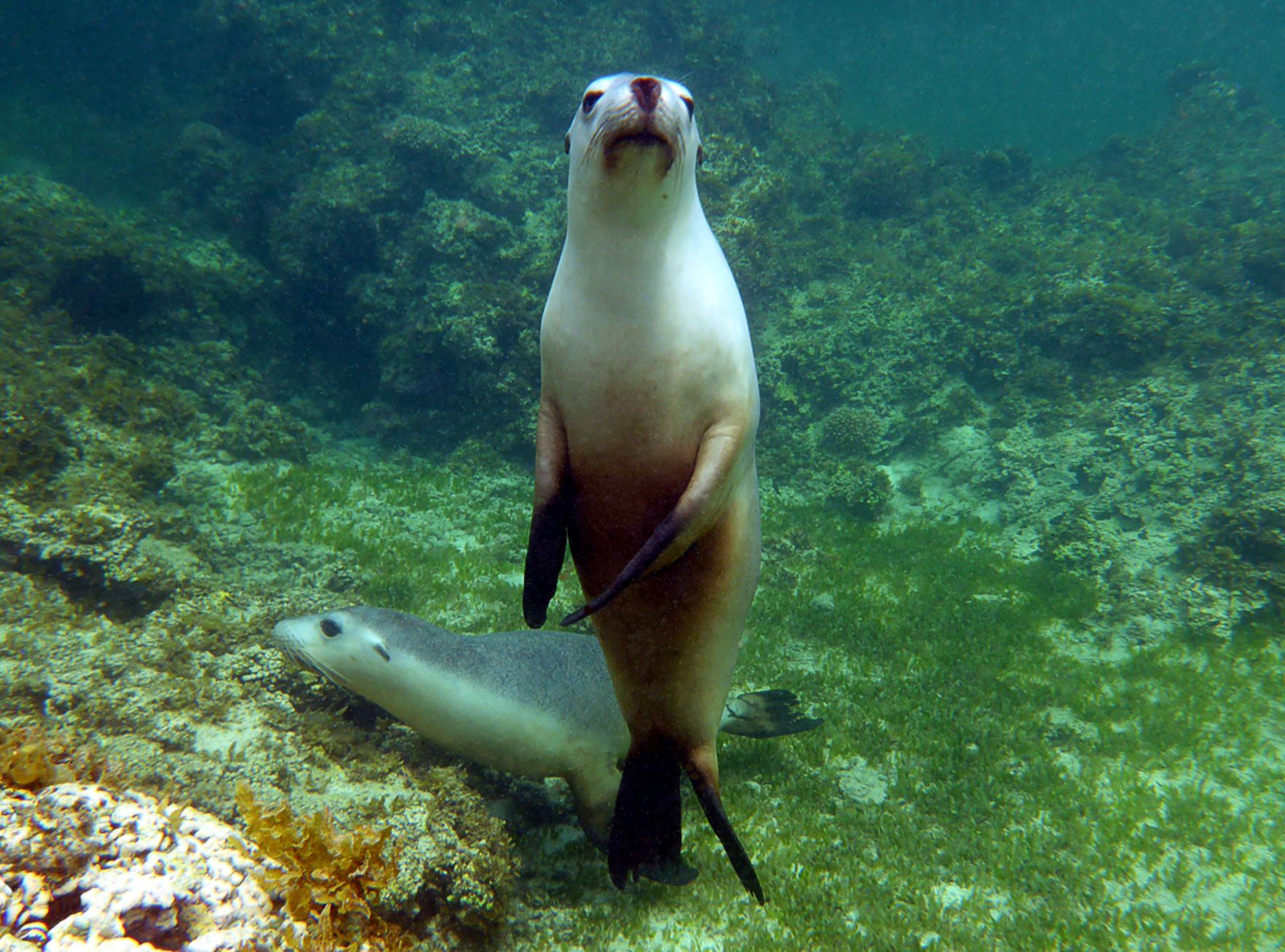
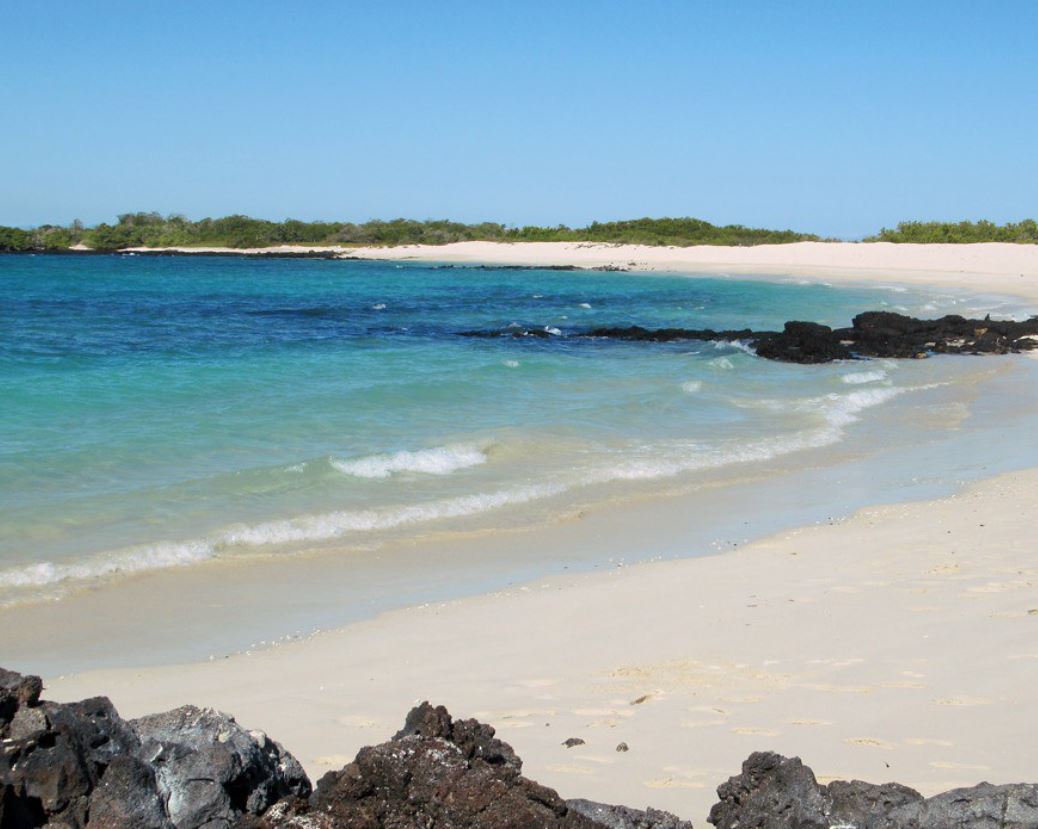
This Island has very unique ecosystems all very different from each other that can be visited. The singular kinds of beach of different colors, the green and the white one, and the fresh water lagoon where flamingos can be observed during the hot season, gives this island a special place in the archipelago. Marine Turtles nesting, Sea Lions, and Blue-Footed Boobies are some of the highlights of the visit. On this location most flora and fauna are endemic even though there has been a populated town since 1832.
Charles Dawin Journey on Floreana. In this island, Darwin collects the Floreana Mockingbird, later to realize the difference in between the four species to be found in the archipelago and understand a pattern of evolution due to the adaptation differences from each other
Animals: Flamingos, red billed tropicbids, herons, hawks,turtles, sharks, stingrays
Plants: Scalesia Villosa, Lecocarpus Pinnatifidus, Nolana, Sea Grape.
Visitor sites:
Asilo de la Paz, Baroness View Point, Champion islet, Cormorant Point, Devils Crown, La Loberia, Post office Bay, Puerto Velasco Ibarra
Genovesa
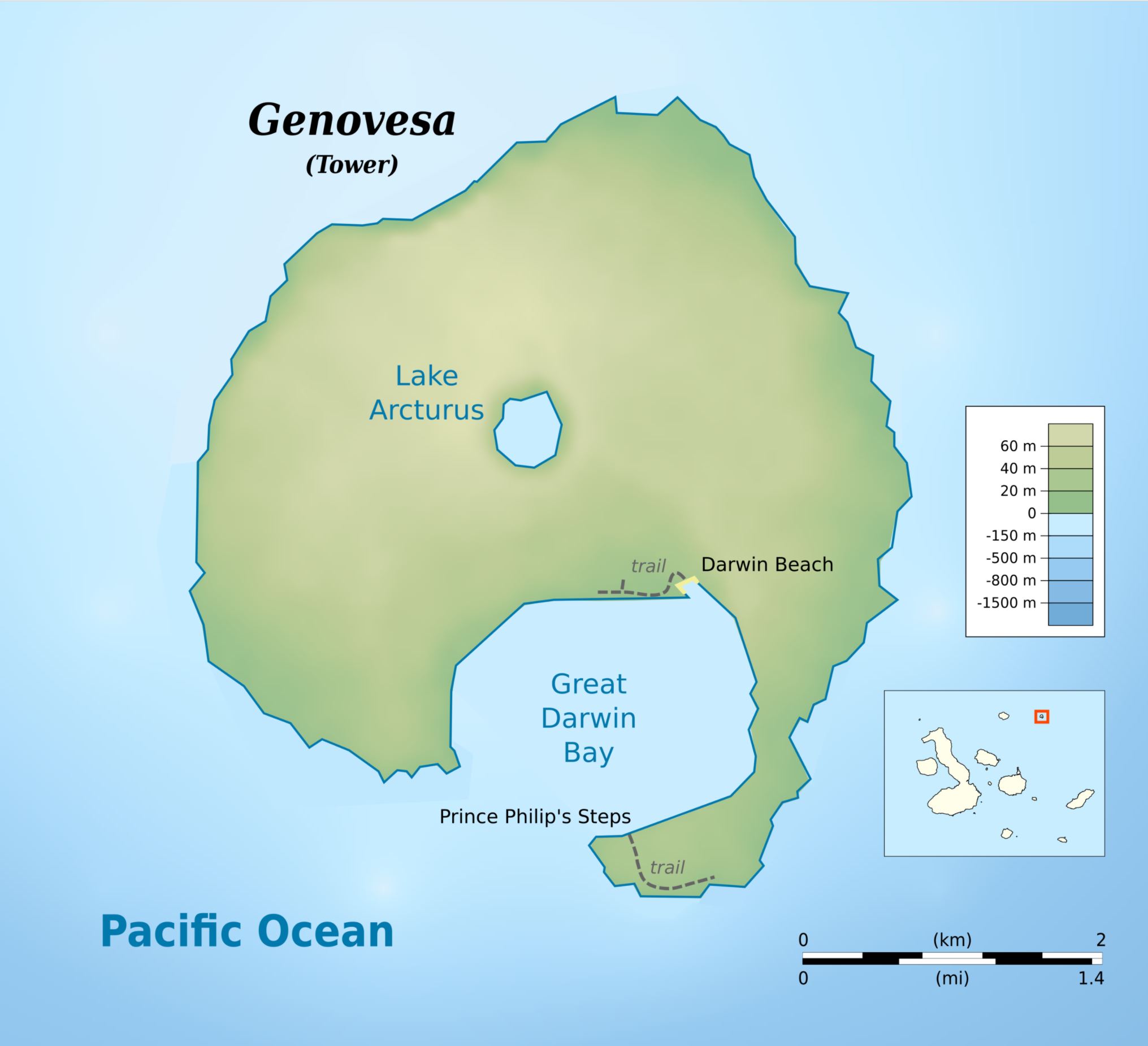
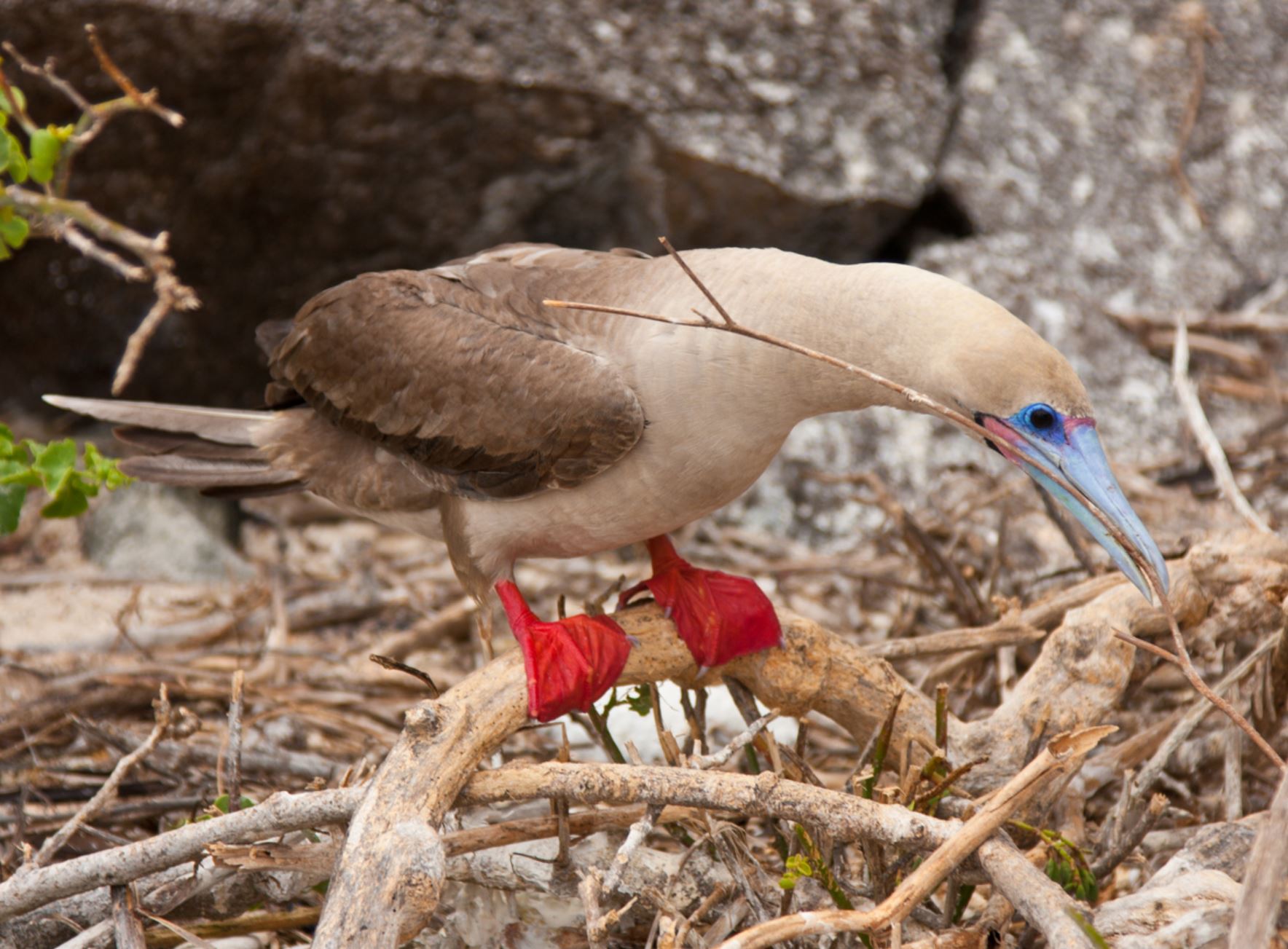
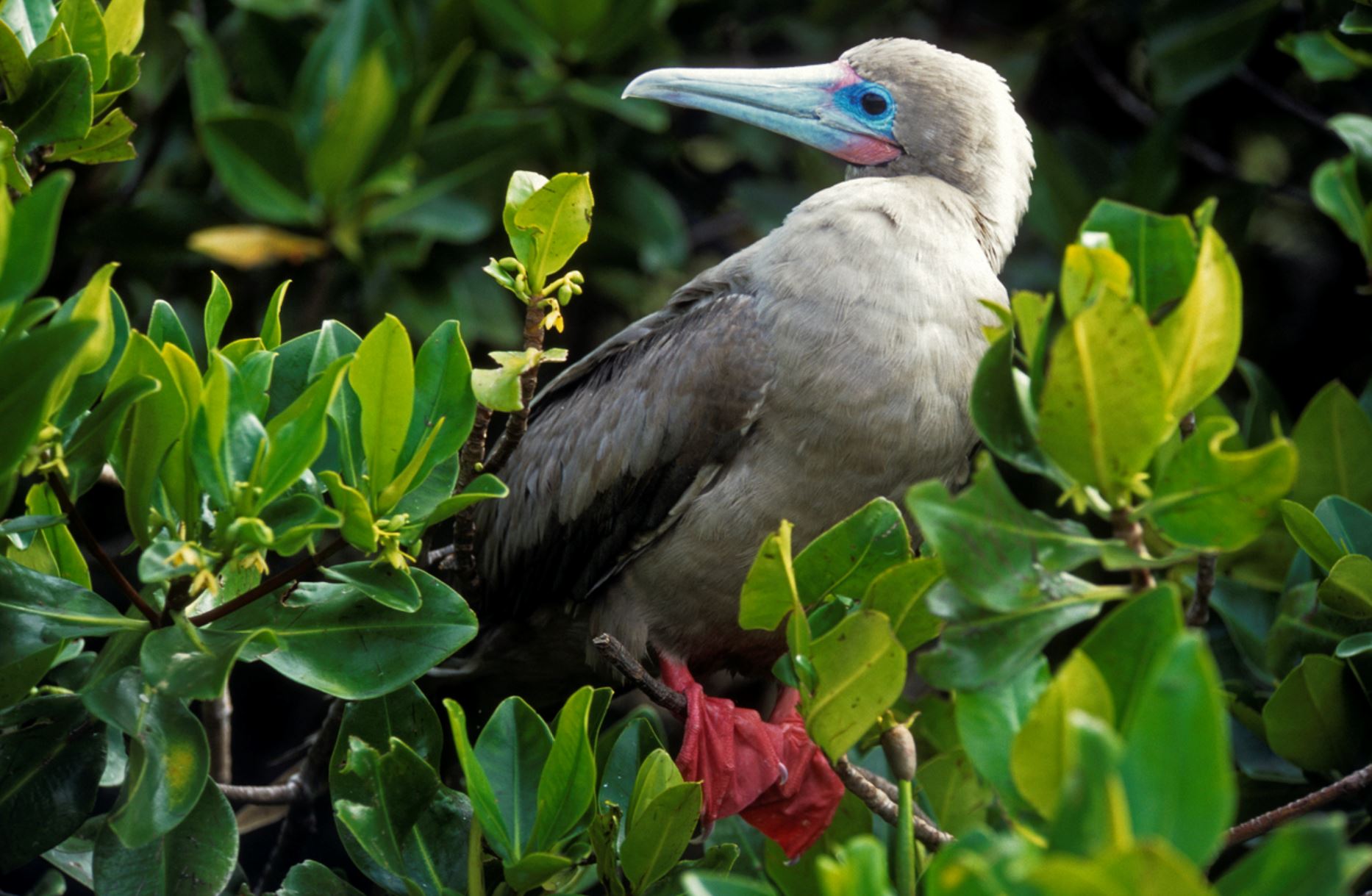
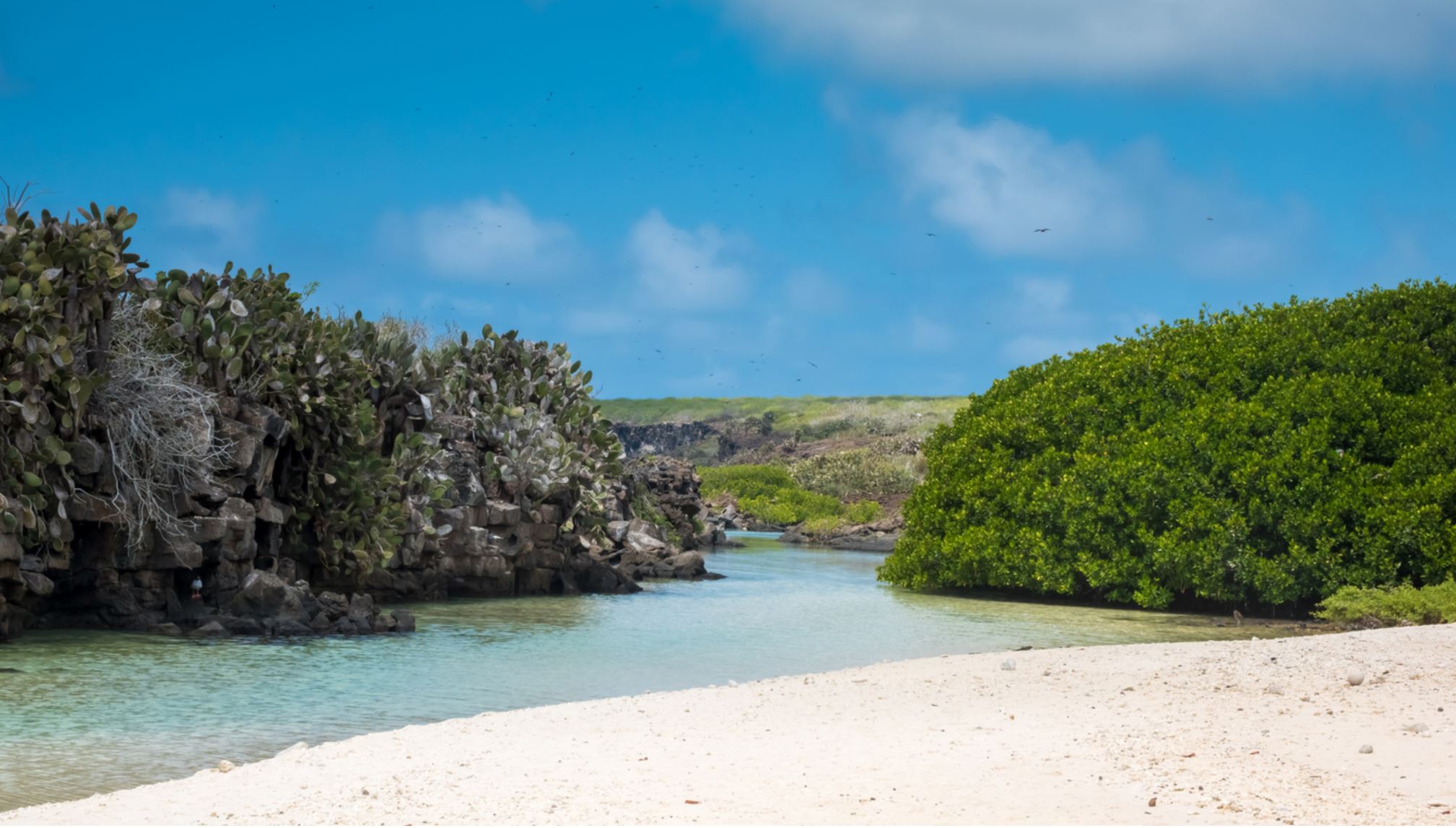
Genovesa Island (Spanish: Isla Genovesa), named after the Italian city of Genoa, in honor of Christopher Columbus, (referred to in English as Tower Island) is a shield volcano in the Galapagos Islands in the eastern Pacific Ocean. The island occupies about 14 square kilometres (5 sq mi), and its maximum elevation is 64 m (210 ft). The horse-shoe shaped island has a volcanic caldera whose wall has collapsed, forming the Great Darwin Bay, surrounded by cliffs. Lake Arcturus, filled with salt water, lies in the centre, and sediment within this crater lake is less than 6,000 years old. Although no historical eruptions are known from Genovesa, there are very young lava flows on the flanks of the volcano. Genovesa is one of the most precious islands to visit in a Galapagos cruise! Genovesa is also known as the “Bird Island“, and it most certainly lives up to certain standard in a spectacular way. Passenger will have the opportunity to enjoy the most representative birds of Galapagos as: Puffball–chicks, white both yellow–crowned and lava herons, Red footed boobies contrasting with the Nazca booby and also the Sawllow–tailed gulls, the only nocturnal gulls in the world that will be nesting at the cliff’s edge.
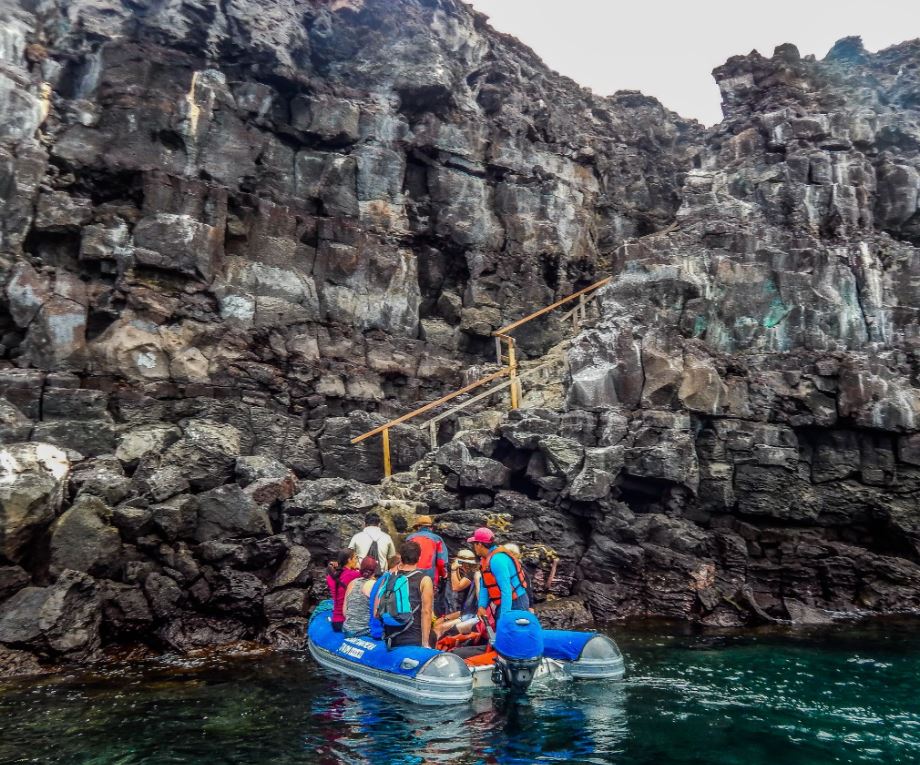
Visitors sites: Darwin Bay, Prince Philp´s Steps
North Seymour
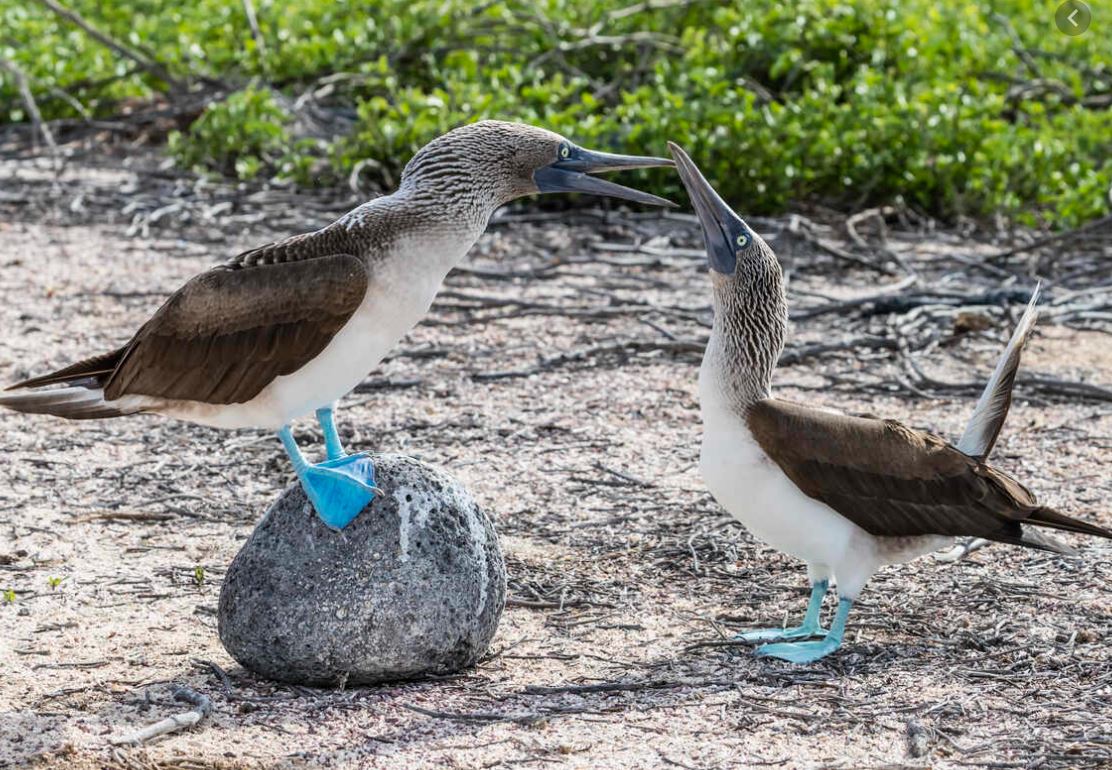
This small island is one of the most important fishing sites for Marine Birds. This place is the reason for many travellers and ornithologists to observe the spectacular and diverse amount of birds of the Galapagos. The visit site is located next to the nesting area of Frigate Birds, both Magnificent and Common, that rest on the trees along the whole year. Witnessing the mating dance of the Blue Footed Boobies is also one of the highlights of the experience. There is additionally a Palo Santo forest that spreads on the south shore of Seymour where birds nest, and offer a spectacular view of the channel formed in between Bartolomé and Seymour. It is an unpopulated island.
Its formation is related to an uplifting of the underwater layer that resulted in a very eroded flat rock surrounded by risks. Here, the marine base is still evident, giant rocks and shells are found everywhere.
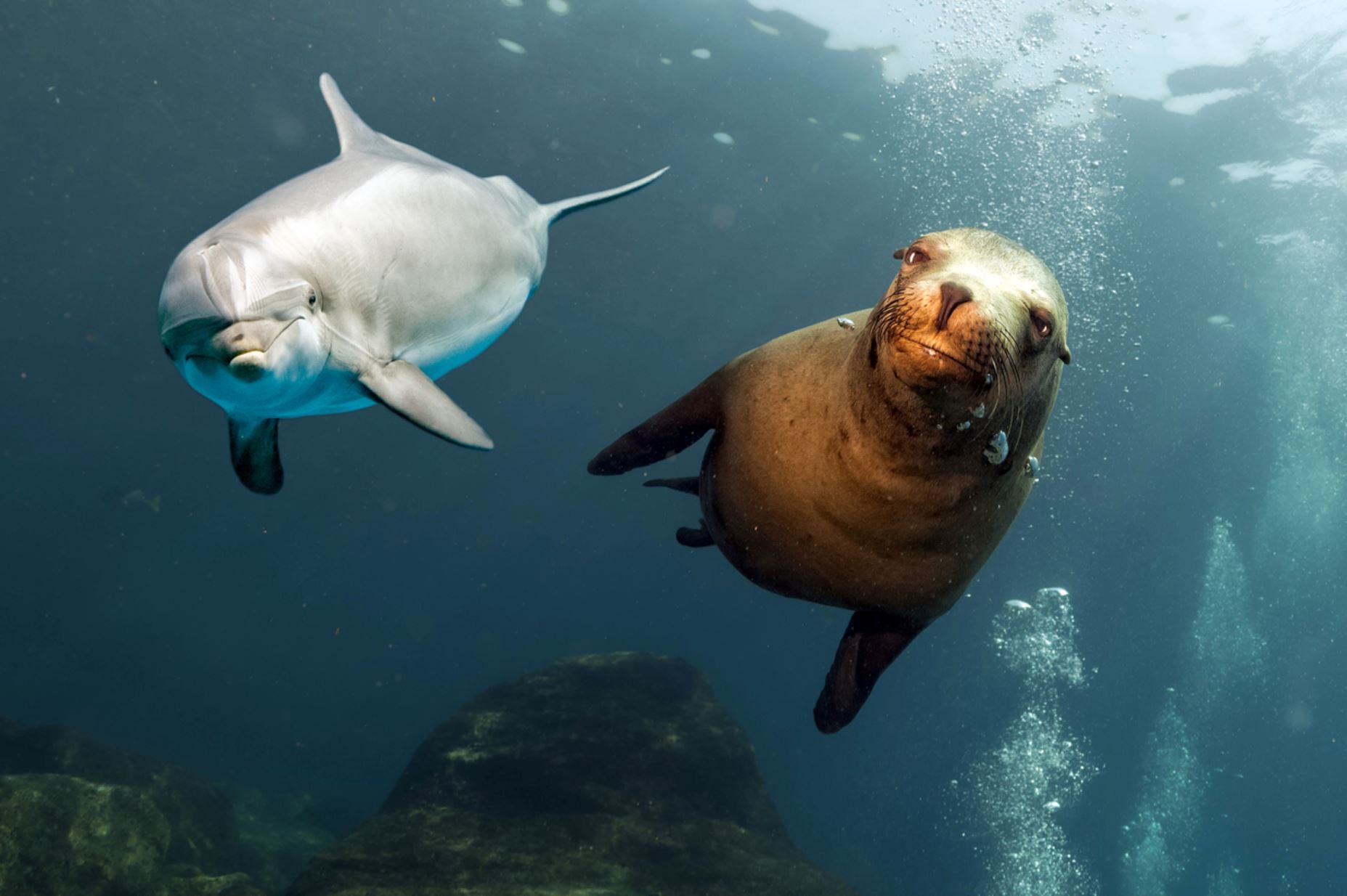
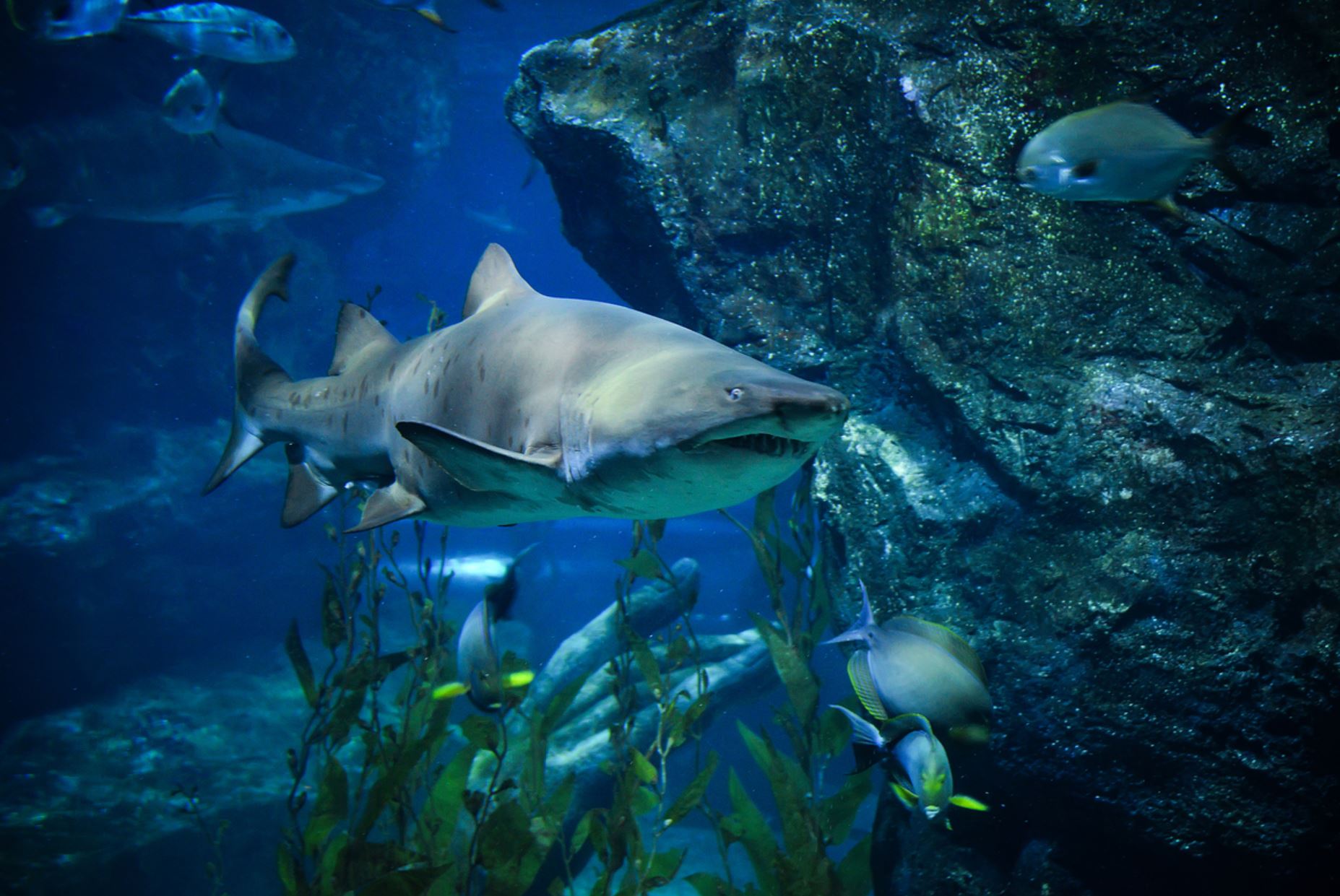
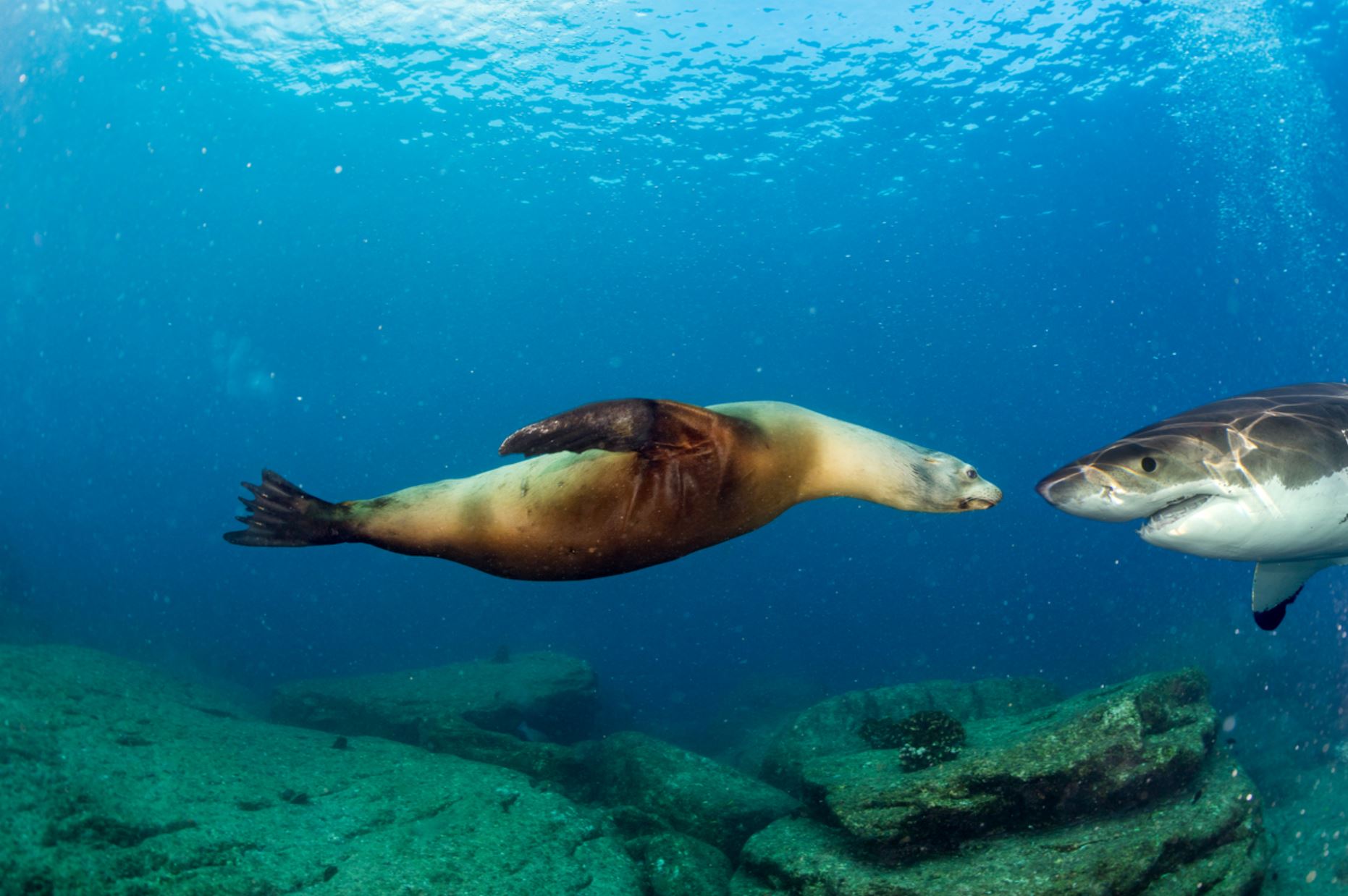
Hundreds of sharks such as the Tiger Shark, Galapagos Shark, Reef Shark and others, swim by the shore of this island. The Upwelling Phenomenon caused by the cold currents, enhance the marine diversity on this snorkelling and dive area.
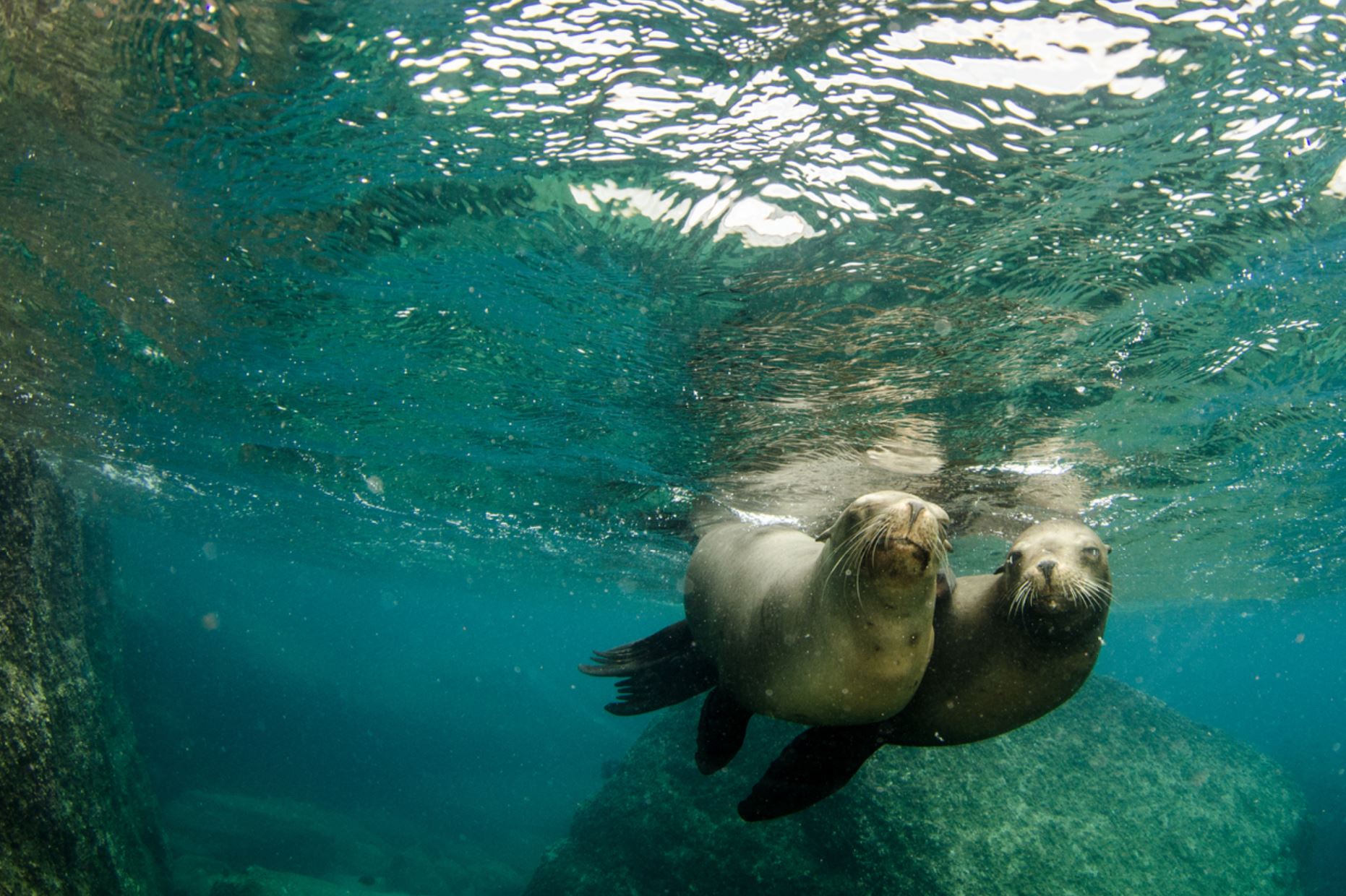
Animals: frigate birds, blue footed boobies, sea lions, marine iguanas, swallow-tailed gulls, snakes, herons, hawks, sharks, rays
Plants: Palo Santo, Opuntia
Discover seabird colonies and witness up close and personal, the most intimate courtship, breeding and nesting behaviors.
Visitor sites:
A walk thru this wonderful small island North Seymour
Mr. Frobeen can give you precise information about the ships.
Mr. Frobeen will be happy to advise you by phone at +49 (0)7633 9399360 or via email info@frobeen.de
If you want to book, what are the payment methods?
The reservation is gratis as an option.
If you want to make an fixed booking, there is to pay a deposit of 20%.
The remaining payment is due 4 weeks before departure. In individual cases, such as diving cruises, other rules apply. Information on request.
- Your payments are insured against bankruptcy!